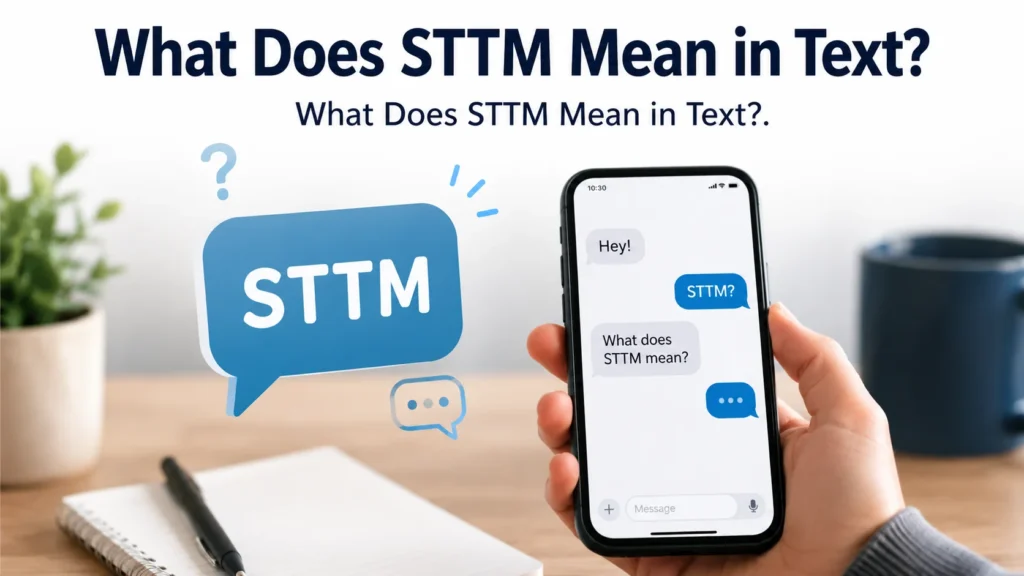

What does a short text like “STTM” actually mean online? If you’ve seen it in messages, TikTok comments, gaming chats, or social media posts, you’re not alone. Internet slang changes fast, especially in the United States, where new abbreviations spread across apps almost overnight.
Today, STTM is mostly used as shorthand for “Stop Talking to Me.” The phrase often appears during arguments, awkward conversations, or playful online teasing. However, tone matters a lot. In some chats, it sounds serious and cold. In others, it’s clearly sarcastic or dramatic.
Because digital communication moves quickly, abbreviations like STTM have become part of modern online culture. People use them to save time, express emotion, or create a certain attitude in conversation. Understanding these phrases helps readers avoid confusion and better understand modern texting culture in the USA.
Quick Answer
What Does STTM Mean in Text? Real-Life Usage (2026 Guide) usually refers to “Stop Talking to Me.” In American texting culture, it’s commonly used to show annoyance, frustration, playful drama, or emotional distance during online conversations.
TL;DR
• STTM usually means “Stop Talking to Me.”
• It’s common in texting and social media chats.
• Tone can be joking, sarcastic, or serious.
• Younger users often use it playfully online.
• The phrase reflects fast digital communication habits.
• Context changes how harsh the message sounds.
What Does STTM Mean in Texting?
The Core Meaning of STTM
STTM is a modern internet abbreviation. Most commonly, it stands for “Stop Talking to Me.” People use it during text conversations when they feel irritated, overwhelmed, embarrassed, or emotionally distant.
In the United States, texting abbreviations often replace full emotional statements. Instead of typing a long response, users shorten feelings into quick phrases. STTM fits that pattern perfectly.
The phrase can sound very different depending on context. For example, one person may use it jokingly after a funny insult. Another may use it seriously during an argument.
Why People Use STTM
Digital conversations move quickly. Because of that, shorter expressions became popular across messaging apps and social platforms.
People often use STTM to:
• End an uncomfortable conversation quickly
• Show fake dramatic anger among friends
• React to embarrassing moments online
• Create distance during arguments
• Sound humorous or sarcastic in chats
• Match modern internet slang trends
The Rise of Internet Slang in America
How Text Abbreviations Became Popular
American texting culture shaped many internet abbreviations used today. Early chatrooms, SMS limits, and instant messaging apps encouraged shorter writing styles.
During the 2000s, abbreviations like LOL, BRB, and OMG became mainstream. Later, social media accelerated slang even more. TikTok, Snapchat, Discord, and gaming communities now create new shorthand constantly.
STTM belongs to this newer wave of emotional abbreviations. Instead of simply saving space, it also communicates mood and attitude.
Why Younger Users Prefer Short Slang
Short phrases feel faster and emotionally expressive online. Many younger Americans use abbreviations as part of digital identity and social belonging.
Common reasons include:
• Faster typing during conversations
• Shared humor inside online communities
• Casual and relaxed communication styles
• Stronger emotional reactions in fewer words
• Trend-based language from viral content
• Group identity among friends or fandoms
Real-Life Examples of STTM Usage
Casual and Funny Uses
In many conversations, STTM is not deeply hostile. Friends often use it after jokes, teasing, or embarrassing comments.
For example:
• “You remembered that story? STTM 😂”
• “That roast was brutal. STTM right now.”
• “You exposed me online. STTM.”
Here, the phrase sounds playful rather than aggressive.
Serious or Emotional Uses
Sometimes STTM reflects genuine frustration or emotional exhaustion. Tone depends on punctuation, timing, and conversation history.
More serious examples include:
• “I’m done arguing. STTM.”
• “Please STTM for a while.”
• “You crossed a line. STTM.”
In these situations, the phrase signals emotional boundaries.
STTM Meaning Across Different Platforms
Social Media Usage
Different platforms influence how people interpret slang. On TikTok or X, STTM often appears humorously. In private texts, however, it may feel more personal.
| Platform | Meaning in the USA | Common Associations | Notes |
| TikTok | Dramatic joking reaction | Humor, memes, teasing | Usually playful |
| Snapchat | Emotional texting shorthand | Friendship drama | Depends on tone |
| Discord | Gaming or social frustration | Arguments, sarcasm | Often exaggerated |
| Instagram DMs | Casual emotional response | Embarrassment, annoyance | Popular among younger users |
| Private texting | Direct emotional message | Boundaries or irritation | Can feel serious |
Gaming and Online Communities
Gaming culture helped normalize many fast abbreviations. Players often communicate rapidly during matches or live chats.
In gaming spaces, STTM may appear after:
• Losing competitive matches
• Friendly trash talk between teammates
• Embarrassing gameplay moments
• Sarcastic reactions during streams
• Overly dramatic joking exchanges
Emotional Meaning Behind STTM
Why the Phrase Feels Strong
Even short abbreviations carry emotional weight. “Stop Talking to Me” sounds direct because it creates distance between people.
Psychologically, phrases like STTM often communicate:
• Frustration without lengthy explanation
• Emotional overload during conversations
• Temporary withdrawal from interaction
• Desire for attention or validation
• Defensive reactions after embarrassment
However, internet culture also softens serious phrases through humor and exaggeration.
Humor Versus Real Conflict
Online communication lacks facial expressions and voice tone. Because of that, people sometimes misunderstand abbreviations like STTM.
A joking STTM may actually mean:
• “That joke was too funny.”
• “I’m pretending to be offended.”
• “You embarrassed me playfully.”
Meanwhile, a serious STTM may reflect real emotional tension.
The Cultural Symbolism of Digital Silence
Why “Stop Talking” Has Symbolic Meaning
Modern internet phrases often symbolize more than literal words. STTM reflects emotional boundaries in digital life.
In American culture, communication is constant. Phones, notifications, and social apps create nonstop interaction. Because of that, telling someone to stop messaging can symbolize:
• A need for emotional space
• Digital exhaustion or burnout
• Temporary social withdrawal
• Reclaiming personal boundaries
• Frustration with online drama
This emotional symbolism explains why short phrases sometimes feel surprisingly powerful.
The Shift Toward Boundary Language
During the 2020s, online conversations increasingly focused on emotional boundaries and mental wellness. People became more comfortable expressing discomfort directly.
As a result, phrases like STTM became part of a larger digital trend involving:
• Setting communication limits
• Reducing emotional stress online
• Ending toxic conversations faster
• Creating space after arguments
• Protecting mental energy
Also Read This: What Does STFU Mean in Text? 2026 Guide
Is STTM Rude or Offensive?
Context Matters Most
STTM can sound rude depending on tone and relationship. Among close friends, it may sound harmless and funny. Between strangers or during conflict, it can feel harsh.
American internet culture often relies heavily on sarcasm. Without context, however, readers may misunderstand the intention.
When STTM May Cause Problems
Using STTM carelessly may create emotional confusion. Some people interpret it as rejection or hostility.
Situations where caution helps include:
• Serious emotional conversations
• Professional communication
• Family disagreements
• Sensitive relationship conflicts
• Conversations with unfamiliar people
Because tone is hard to read online, context matters more than the abbreviation itself.
How STTM Fits Into Modern American Slang
Internet Identity and Expression
Slang reflects social identity. In the USA, online abbreviations often signal age group, humor style, or internet awareness.
People using STTM may want to appear:
• Casual and digitally fluent
• Funny or dramatic
• Emotionally expressive
• Connected to online culture
• Part of younger internet communities
The Influence of Meme Culture
Meme culture changed how people communicate emotions online. Dramatic exaggeration became part of internet humor.
For example, users may type:
• “STTM forever.”
• “Actually crying. STTM.”
• “Delete this immediately. STTM.”
These phrases usually exaggerate reactions for comedic effect.
Other Meanings of STTM
Less Common Interpretations
Although “Stop Talking to Me” is the most common meaning, abbreviations sometimes develop alternate uses in niche communities.
Rare interpretations may appear in:
• Music fandom spaces
• Internal gaming groups
• Private friend jokes
• Small online communities
• Organization-specific shorthand
However, in mainstream American texting culture, “Stop Talking to Me” remains the dominant meaning.
Why Internet Meanings Change
Online slang evolves rapidly. Some abbreviations disappear within months, while others become long-term internet vocabulary.
Changes happen because of:
• Viral social media trends
• Influencer usage
• Meme popularity
• Platform-specific communities
• Generational language shifts
Cross-Cultural Differences in Text Slang
American Versus Global Usage
American internet slang strongly influences global digital language. However, not every country uses abbreviations identically.
In some regions, people may not recognize STTM immediately. Others may interpret it differently based on local texting culture.
Universal Themes Behind Slang
Even across cultures, short internet phrases often express similar emotions.
Common universal themes include:
• Frustration or emotional overload
• Humor and sarcasm
• Friendship teasing
• Social belonging online
• Fast emotional communication
Because digital culture spreads globally, slang now travels faster than ever.
How Social Media Changed Communication
Emotional Speed Online
Social media rewards quick emotional reactions. Short abbreviations work perfectly in fast-moving conversations.
Apps encourage:
• Instant responses
• Emotional exaggeration
• Short attention spans
• Visual humor and memes
• Rapid trend adoption
STTM reflects this modern communication style.
The Decline of Formal Texting
Over time, texting became less formal in the USA. Younger generations especially prefer relaxed language online.
Modern texting now includes:
• Lowercase writing styles
• Shortened emotional phrases
• Meme references
• Reaction abbreviations
• Intentional dramatic wording
STTM fits naturally into this informal digital environment.
Misunderstandings and Online Drama
Why Slang Creates Confusion
Internet abbreviations sometimes cause misunderstandings because tone disappears in plain text.
For example, readers may struggle to tell whether STTM means:
• Real anger
• Playful teasing
• Fake drama
• Emotional exhaustion
• Sarcasm
Because of this, online slang occasionally increases conflict instead of reducing it.
The Importance of Context Clues
People often rely on emojis, punctuation, and relationship history to interpret tone correctly.
Helpful context clues include:
• Laughing emojis after the phrase
• Capital letters for stronger emotion
• Previous argument context
• Friendship dynamics
• Timing of the message
These small details shape interpretation.
FAQs
What does STTM mean in texting?
STTM usually means “Stop Talking to Me.” It’s commonly used in American texting culture during jokes, arguments, or dramatic online reactions.
Is STTM always rude?
No. Many people use STTM jokingly with close friends. However, during serious conversations, it may sound cold or dismissive.
Where is STTM most commonly used?
STTM appears most often on TikTok, Snapchat, Discord, Instagram, and private text messages. Younger users tend to use it more frequently.
Does STTM have other meanings?
Sometimes. Small online communities may use alternative meanings, but “Stop Talking to Me” remains the most recognized interpretation.
Why do people use abbreviations like STTM?
People use shorthand to communicate emotions quickly online. It also helps conversations feel casual, humorous, and modern.
Can STTM damage relationships?
It depends on context and tone. Used carelessly, it may hurt feelings or create misunderstandings, especially during emotional discussions.
Conclusion
Digital slang changes constantly, but emotional shorthand remains a major part of online communication. Today, STTM most commonly means “Stop Talking to Me,” though the tone can range from playful teasing to genuine frustration.
In American internet culture, phrases like STTM reflect how quickly emotions move online. They combine humor, attitude, sarcasm, and emotional boundaries into just a few letters. While the phrase may seem simple, its meaning depends heavily on context, relationships, and platform culture.
As texting language keeps evolving, understanding expressions like What Does STTM Mean in Text? Real-Life Usage (2026 Guide) helps readers stay connected to modern digital conversations without confusion.