
People send short text slang every day. However, some abbreviations carry much stronger emotions than others. One example is GTFO, a phrase that appears in texts, memes, gaming chats, and social media posts across the United States.
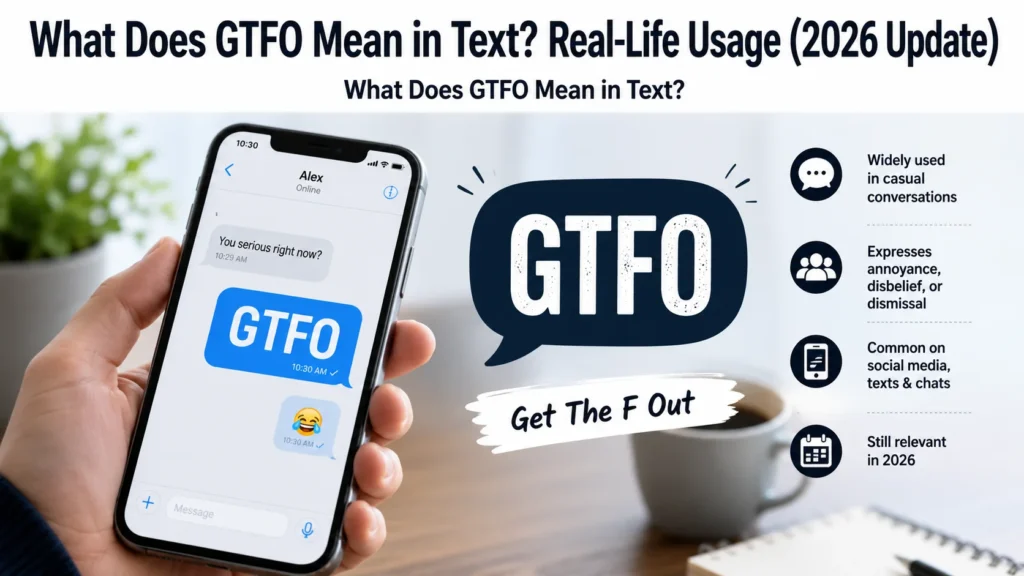
“What Does GTFO Mean in Text? Real-Life Usage (2026 Update)” matters because digital language changes fast. A phrase that once sounded shocking can later become playful, sarcastic, or even humorous depending on context. Today, many Americans recognize GTFO instantly, especially younger internet users.
Although GTFO is mainly internet slang, it also reflects something deeper about modern communication. It shows how people express frustration, disbelief, excitement, or emotional intensity in a very short form. Because of that, the phrase has become part of online culture, gaming identity, meme humor, and everyday texting habits in the USA.
Quick Answer
In the USA, GTFO means “Get The F* Out.”** People use it online to express shock, disbelief, anger, excitement, or dismissal. Depending on tone and context, it can sound aggressive, funny, sarcastic, or playful.
TL;DR
• GTFO usually means “Get The F*** Out.”
• The phrase expresses strong emotion or disbelief.
• Americans commonly use it in texting and gaming.
• Tone changes meaning completely.
• Some people see it as rude or offensive.
• Internet culture made the slang globally recognizable.
What Does GTFO Mean in Texting?
GTFO is one of the most recognizable internet abbreviations in modern American digital culture. While the phrase sounds blunt, many users now treat it as casual online slang rather than a literal command.
Literal Meaning
The abbreviation stands for:
• “Get The F*** Out”
• A strong command to leave
• An emotional reaction phrase
• A dramatic response to shocking news
Originally, the phrase sounded openly hostile. However, texting culture softened its meaning over time.
How Americans Use GTFO Today
In the United States, GTFO often appears in:
• Group chats
• TikTok comments
• Gaming voice chats
• Meme captions
• Snapchat messages
• Reddit discussions
Today, context matters more than the words themselves. Friends may use GTFO jokingly after hearing unbelievable news.
For example:
“You met your favorite actor? GTFO!”
In this case, the phrase means “No way!” rather than “Leave.”
Tone Completely Changes the Meaning
GTFO can sound:
• Funny
• Angry
• Excited
• Sarcastic
• Dismissive
• Shocked
Because tone is hard to read in text, misunderstandings happen often.
The History of GTFO and Internet Slang
GTFO belongs to a long tradition of shortened language. Although the internet popularized it, abbreviated emotional expressions existed long before smartphones.
Early Roots of Abbreviated Speech
Humans have shortened language for centuries. People used initials in:
• Military communication
• handwritten letters
• radio messaging
• early computer systems
However, internet forums in the 1990s accelerated slang culture dramatically.
Rise During Online Gaming Culture
GTFO became especially popular in:
• MMORPG gaming communities
• Xbox Live chats
• internet forums
• early meme websites
Fast online communication encouraged shorter emotional phrases. Gamers often used GTFO during chaotic moments or arguments.
Internet Humor Changed Its Meaning
Over time, meme culture softened the phrase.
Instead of pure anger, GTFO began signaling:
• exaggerated disbelief
• dramatic humor
• playful reactions
• friendly teasing
This shift reflects how internet culture often transforms aggressive phrases into jokes.
Why GTFO Became Popular in the USA
American internet culture strongly shaped the spread of GTFO. The phrase matched the fast, emotional style of online communication that grew during the smartphone era.
American Digital Communication Style
Many Americans prefer:
• short responses
• expressive slang
• emotional exaggeration
• meme-based humor
GTFO fits perfectly into that style because it feels intense and immediate.
Influence of Entertainment and Media
American media also normalized strong slang through:
• comedy shows
• gaming streams
• reaction videos
• viral memes
• social media influencers
As online entertainment expanded, slang phrases spread faster across generations.
Emotional Speed in Online Culture
GTFO works because it communicates emotion instantly.
Instead of writing long reactions, users can express:
• surprise
• frustration
• disbelief
• excitement
• rejection
That emotional efficiency helped the phrase survive into 2026.
GTFO Meaning by Context
GTFO does not always mean the same thing. In fact, context completely changes its emotional impact.
GTFO in Friendly Conversations
Among friends, GTFO often means:
• “You’re joking!”
• “No way!”
• “That’s unbelievable!”
• “I can’t believe it!”
This version is usually playful.
GTFO During Arguments
In heated situations, the phrase may become aggressive.
Possible meanings include:
• “Leave immediately.”
• “Stop talking.”
• “Go away.”
• “I’m angry.”
Because of this, tone matters carefully online.
GTFO in Meme Culture
Memes turned GTFO into exaggerated humor.
Common meme uses include:
• fake outrage
• overdramatic reactions
• sarcastic disbelief
• reaction image captions
This playful use dominates younger internet spaces today.
GTFO in Gaming Culture
Gaming culture helped make GTFO globally famous. Competitive online games created fast, emotional communication styles that favored short slang phrases.
Why Gamers Use GTFO
Gamers often communicate during intense moments. Therefore, short phrases matter.
GTFO may mean:
• “Move now!”
• “Danger incoming!”
• “Run away!”
• “Get out quickly!”
In some games, speed matters more than politeness.
Gaming Communities and Identity
Gaming slang often creates group identity. Using phrases like GTFO signals familiarity with internet culture.
For many players, the phrase feels:
• casual
• humorous
• competitive
• emotionally intense
Streaming and Online Influence
Twitch streams and esports content helped spread gaming slang into mainstream American culture.
Today, even non-gamers recognize terms once limited to gaming communities.
Emotional and Psychological Meaning of GTFO
Although GTFO is just slang, it reflects deeper emotional habits in digital communication.
Strong Emotion in Short Form
Modern texting rewards speed and impact. GTFO compresses intense emotion into four letters.
Psychologically, it may express:
• shock
• overstimulation
• emotional release
• humor through exaggeration
Digital Identity and Expression
People often use slang to shape identity online.
Using GTFO can signal:
• internet fluency
• sarcasm
• humor style
• emotional boldness
• gaming culture familiarity
Why Intense Slang Feels Popular
Strong slang feels emotionally satisfying because it sounds dramatic. Even playful versions create stronger reactions than ordinary words.
That emotional intensity keeps phrases memorable.
GTFO in Social Media and Memes
Social media transformed GTFO from niche slang into mainstream internet language.
Platforms Where GTFO Appears Most
The phrase commonly appears on:
• TikTok
• Instagram comments
• X posts
• Reddit threads
• Discord servers
• YouTube reactions
Each platform uses the slang slightly differently.
Meme Humor and Exaggeration
Internet humor often depends on exaggerated reactions. GTFO fits perfectly into that style.
For example, users may react dramatically to:
• celebrity gossip
• shocking stories
• unbelievable photos
• sports moments
• viral videos
GIFs, Emojis, and Reaction Culture
GTFO frequently appears beside:
• laughing emojis
• reaction GIFs
• shocked face memes
• dramatic screenshots
Visual internet culture strengthened the phrase’s emotional power.
Common GTFO Situations in American Culture
The phrase appears in many everyday American online interactions.
Real-Life Situations
| Context | Meaning in the USA | Common Associations | Notes |
| Group chats | Shock or disbelief | Humor, gossip | Usually playful |
| Gaming chats | Urgent command | Competition, teamwork | Fast communication |
| Meme comments | Exaggerated reaction | Sarcasm, comedy | Often non-serious |
| Arguments online | Dismissal or anger | Conflict, frustration | Can sound offensive |
| Friend conversations | Friendly teasing | Excitement, surprise | Tone matters heavily |
Why It Feels Familiar
Americans see GTFO so often that many instantly recognize its emotional tone before reading surrounding words.
That familiarity helped normalize the phrase in casual internet culture.
Also Read This: What Does STTM Mean in Text? Real-Life Usage (2026 Guide)
Is GTFO Offensive?
This question matters because interpretations vary by age, setting, and relationship.
Why Some People Find It Offensive
GTFO contains profanity, even in abbreviated form. Because of that, some readers view it as:
• disrespectful
• hostile
• immature
• unnecessarily aggressive
Older audiences may react more negatively.
Why Others See It as Harmless
Younger internet users often treat GTFO as meme slang instead of literal profanity.
In casual settings, it may feel:
• humorous
• exaggerated
• playful
• emotionally expressive
Workplace and Public Use
GTFO is usually inappropriate in:
• professional emails
• workplace messaging
• school assignments
• formal communication
However, informal online spaces use it constantly.
Cross-Cultural Understanding of GTFO
Although GTFO started mainly in English-speaking internet culture, social media spread it globally.
International Recognition
Many non-American users recognize GTFO through:
• gaming culture
• Hollywood media
• online memes
• English-language platforms
However, cultural reactions differ widely.
Different Comfort Levels
Some cultures view profanity more seriously than American internet communities do. Therefore, GTFO may sound harsher internationally.
Translation Challenges
GTFO often loses its emotional nuance when translated directly. In many languages, the phrase sounds more aggressive than intended.
Because of that, context becomes even more important cross-culturally.
How GTFO Changed Over Time
The meaning of GTFO shifted significantly from the early internet era to 2026.
Early Internet Meaning
Originally, GTFO mostly meant:
• anger
• rejection
• dismissal
• hostility
The phrase sounded much harsher during early online gaming years.
Modern Meme Evolution
Today, playful disbelief dominates many uses.
Modern meanings include:
• “That’s insane!”
• “You’re kidding!”
• “Seriously?”
• “No way!”
Generational Differences
Different age groups interpret GTFO differently.
Younger users may see humor first. Older users may focus on profanity instead.
GTFO and Modern Digital Identity
Internet slang often reflects social belonging. GTFO became part of online identity for many Americans.
Slang as Social Connection
Using familiar slang helps people feel connected to online communities.
GTFO may signal membership in:
• gaming spaces
• meme culture
• Gen Z communication
• internet-native communities
Casual Rebellion and Humor
Profanity-based slang sometimes feels rebellious. However, modern users often treat it more as comedy than defiance.
Why Slang Keeps Changing
Digital culture evolves rapidly. Some slang disappears quickly, while emotionally flexible phrases survive longer.
GTFO survived because it adapts easily across situations.
FAQs
What does GTFO literally stand for?
GTFO stands for “Get The F*** Out.” The phrase usually expresses shock, disbelief, anger, or dramatic humor online.
Is GTFO always rude?
No. Tone changes the meaning completely. Friends often use it jokingly, while arguments may make it sound aggressive.
Do younger Americans still use GTFO in 2026?
Yes. Although newer slang appears constantly, GTFO remains common in memes, gaming, and texting culture.
Is GTFO appropriate for work?
Usually not. Because it contains implied profanity, professional settings generally avoid it.
Why do gamers use GTFO so often?
Gaming requires fast emotional communication. The phrase quickly signals urgency, surprise, or frustration during gameplay.
Can GTFO mean excitement?
Yes. Many people use GTFO after hearing unbelievable or exciting news. In those cases, it means “No way!” rather than “Leave.”
Conclusion
Internet slang changes constantly, yet some phrases remain powerful across generations. GTFO survived because it delivers strong emotion quickly, whether that emotion is shock, humor, frustration, or disbelief.
In the United States, digital culture transformed GTFO from a harsh command into a flexible reaction phrase used in memes, gaming, texting, and social media. However, tone still matters greatly, and the phrase can sound playful or offensive depending on context.
Understanding “What Does GTFO Mean in Text? Real-Life Usage (2026 Update)” helps modern readers better understand how internet language reflects emotion, identity, and cultural change. As online communication keeps evolving, slang like GTFO continues showing how people connect, react, and express themselves in the digital world.