
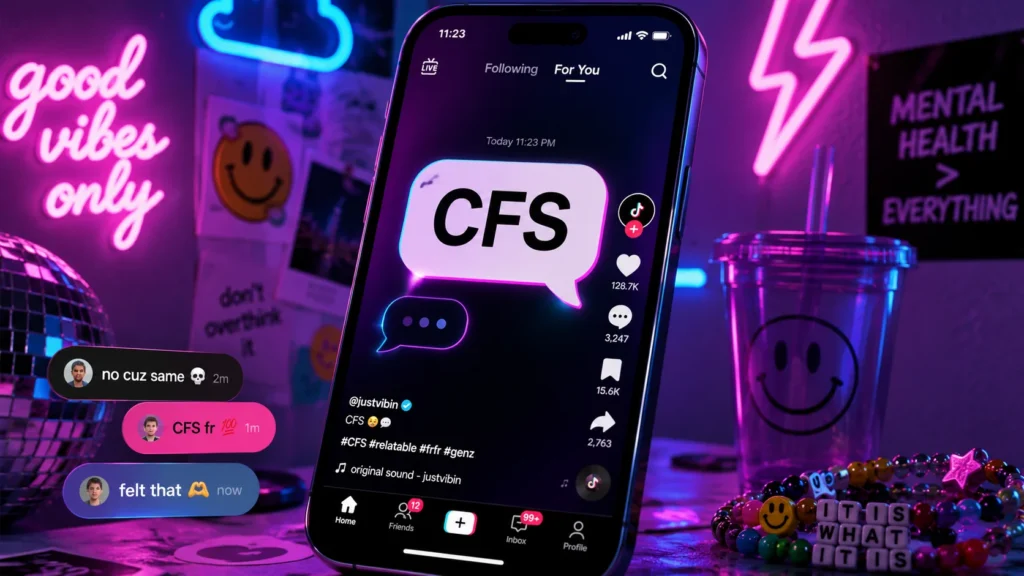

CFS is one of those internet slang terms that can confuse people fast. You might see it in a TikTok caption, Snapchat message, or Instagram story and wonder what it actually means. Like many online abbreviations, its meaning depends heavily on context, platform, and age group.
Today, slang spreads faster than ever in the United States. A phrase can begin inside a niche online community and become mainstream within weeks. That’s exactly what happened with CFS. Younger users especially use it in texting, TikTok comments, and casual digital conversations.
However, doesn’t always mean the same thing. In some spaces, it refers to social media features. In others, it carries emotional or humorous meanings. Because of that, understanding the tone behind the letters matters just as much as the definition itself.
Quick Answer
CFS Meaning Slang usually refers to “Close Friends Story” on platforms like Instagram and Snapchat. In texting and TikTok culture, it can also suggest exclusivity, private sharing, or inside-group communication. Sometimes, people use it jokingly or emotionally to hint at trust, gossip, or hidden feelings.
TL;DR
• CFS often means “Close Friends Story” online
• It became popular through Instagram culture
• The slang suggests privacy and trusted circles
• TikTok users expanded its emotional meanings
• Context changes how CFS should be understood
• It reflects modern digital identity and social groups
What Does CFS Mean in Slang?
The Main Meaning Online
In modern American internet slang, CFS most commonly means “Close Friends Story.” The phrase comes from Instagram’s Close Friends feature, where users share private stories with selected people only.
Because of that, the abbreviation quickly became shorthand in texting culture. Instead of saying “I posted it on my Close Friends Story,” users simply type “CFS.”
Today, the phrase often appears in:
• TikTok captions
• Snapchat conversations
• Instagram story replies
• Discord chats
• Group texts among friends
Why People Use Abbreviations Like CFS
Internet slang favors speed and exclusivity. Short forms help users communicate quickly while also creating a sense of belonging.
For many younger Americans, slang terms act like social markers. Knowing what CFS means signals familiarity with digital culture.
• Short slang feels casual and modern
• Abbreviations save typing time
• Insider language creates group identity
• Viral platforms spread terms rapidly
• Slang changes constantly across generations
The Origins of CFS in Social Media Culture
Instagram’s Role in Popularizing CFS
The modern meaning of CFS traces directly to Instagram and its Close Friends feature, introduced in 2018. The tool allowed users to share stories with a selected audience instead of all followers.
At first, the feature focused on privacy. However, younger users quickly transformed it into a cultural symbol. Being added to someone’s Close Friends Story began carrying emotional meaning.
For example, people started viewing inclusion as:
• A sign of trust
• Romantic interest
• Social status
• Friendship validation
• Access to private thoughts
Because of that shift, “CFS” evolved beyond a simple feature name.
The Rise of Private Digital Spaces
Earlier internet culture focused heavily on public posting. Over time, though, many users became more selective online.
Americans especially began valuing smaller digital circles. Private stories, hidden accounts, and close-group chats became symbols of emotional safety and authenticity.
CFS reflects that broader cultural shift:
• Public feeds feel curated
• Private stories feel more honest
• Users want controlled audiences
• Smaller groups reduce social pressure
• Exclusive spaces create emotional intimacy
CFS Meaning on TikTok
How TikTok Changed the Tone
On TikTok, slang often evolves through humor, exaggeration, and trends. Because of that, CFS gained emotional and dramatic meanings beyond Instagram.
A TikTok creator might say:
• “This belongs on my CFS”
• “Not posting this except on CFS”
• “Only my CFS knows this”
In these situations, CFS symbolizes secrecy, vulnerability, or emotional closeness.
Emotional Meanings on TikTok
TikTok users often treat Close Friends Stories like digital diaries. Instead of polished public content, users post:
• Emotional rants
• Relationship updates
• Unfiltered selfies
• Personal jokes
• Hidden opinions
As a result, CFS now represents more than a feature. It symbolizes emotional access.
CFS Meaning in Text Messages
Everyday Texting Usage
In texting culture, CFS usually keeps its “Close Friends Story” meaning. However, tone matters greatly.
Someone texting “That’s going on CFS” often implies:
• The moment is personal
• Only trusted people will see it
• The content is embarrassing or funny
• It isn’t public-friendly
The phrase can feel playful, dramatic, or intimate depending on context.
Why Text Slang Matters Socially
Modern texting slang acts almost like emotional shorthand. Instead of explaining feelings directly, users reference online behaviors.
For younger Americans especially, digital actions carry symbolic meaning:
| Context | Meaning in the USA | Common Associations | Notes |
| Added to CFS | Social trust | Friendship, closeness | Often emotionally meaningful |
| Removed from CFS | Social distance | Rejection, conflict | Sometimes seen as dramatic |
| Posting on CFS | Private sharing | Honesty, vulnerability | More personal than public posts |
| Mentioning CFS in texts | Insider communication | Group identity | Common among Gen Z |
| “Only CFS saw this” | Limited audience | Privacy, exclusivity | Signals selective trust |
Why CFS Became Symbolic Online
Digital Trust and Inner Circles
Historically, humans have always created inner circles. Ancient tribes, religious groups, and close communities often separated public identity from private identity.
Today, social media recreates that pattern digitally.
CFS symbolizes:
• Emotional trust
• Social belonging
• Selective visibility
• Modern friendship bonds
• Controlled vulnerability
In many ways, the term reflects timeless human behavior using modern technology.
The Psychology Behind Private Sharing
People often behave differently in smaller groups. Psychologists call this “contextual self-expression.” In simple terms, people reveal different sides of themselves depending on audience size.
That’s why CFS feels emotionally powerful to many users:
• Smaller audiences reduce anxiety
• Privacy encourages honesty
• Exclusive groups build connection
• Hidden spaces feel emotionally safer
• Selective sharing increases authenticity
Also Read This: BTA Meaning Slang: What It Really Means Online
CFS and Gen Z Identity
How Younger Americans Use It
Gen Z culture heavily shapes modern slang in the United States. Unlike older generations, many younger users grew up with social media from childhood.
Because of that, digital tools became part of emotional identity.
For Gen Z users, CFS can symbolize:
• Social ranking
• Friendship closeness
• Emotional openness
• Online authenticity
• Personal trust networks
Humor and Irony Around CFS
Internet culture also turns nearly everything into a joke. Users sometimes exaggerate the importance of CFS for comedic effect.
Common examples include:
• Pretending CFS membership is elite
• Joking about being removed
• Posting fake “CFS applications”
• Making dramatic friendship memes
This humor reflects modern online culture’s blend of sincerity and irony.
CFS Meaning Across Different Platforms
On Instagram, CFS remains closest to its original meaning. It mainly refers to private stories visible only to selected followers.
Snapchat
On Snapchat, the term sometimes overlaps with private stories or trusted friend groups. However, usage varies more widely.
TikTok
On TikTok, the phrase became emotionally expressive and meme-driven.
Discord and Group Chats
Inside smaller communities, CFS may symbolize insider access or trusted membership.
• Instagram uses the term most literally
• TikTok adds emotional meaning
• Snapchat overlaps with private sharing culture
• Group chats use it socially or humorously
• Context always changes interpretation
Cross-Cultural Meanings of Private Sharing
Privacy Across Cultures
Although CFS is modern slang, the idea behind it is ancient. Most cultures throughout history separated public life from trusted inner relationships.
In many traditions:
• Families guarded private matters carefully
• Sacred knowledge stayed within groups
• Communities valued trusted circles
• Personal sharing required emotional loyalty
Digital culture simply transformed those patterns into online behavior.
American Cultural Influence
The United States strongly shaped internet slang culture through major social media platforms and entertainment trends.
American online culture often values:
• Self-expression
• Individual identity
• Personal storytelling
• Friendship visibility
• Digital authenticity
CFS fits naturally within those values.
Emotional and Psychological Meaning of CFS
Why Being Included Feels Important
Humans naturally seek belonging. Even small online actions can feel emotionally meaningful.
Being added to someone’s CFS may create feelings of:
• Acceptance
• Validation
• Trust
• Social importance
• Emotional closeness
Meanwhile, exclusion can sometimes feel surprisingly personal.
The Symbolism of Selective Visibility
CFS also reflects a modern psychological tension: people want visibility and privacy at the same time.
Users often want:
• Public attention
• Private emotional safety
• Social recognition
• Controlled vulnerability
Close Friends Stories allow both needs to exist together.
Modern Uses of CFS in Pop Culture
Social Media Trends
Influencers and creators regularly reference CFS in:
• Storytime videos
• Relationship memes
• Friendship jokes
• Reaction videos
• Viral skits
Because of that exposure, the slang spread rapidly beyond teenagers.
Branding and Digital Aesthetics
Some online creators even use “CFS vibes” as a style category. It often suggests:
• Casual photos
• Messy authenticity
• Emotional openness
• Unfiltered humor
• Private-energy aesthetics
This reflects a wider cultural move away from overly polished online identities.
Misunderstandings and Confusing Meanings
Other Definitions of CFS
Not every use of CFS relates to slang. In medical or professional contexts, the abbreviation may mean completely different things.
For example:
• Chronic Fatigue Syndrome
• Call for Service
• Customer Financial Services
That’s why context matters heavily.
Why Slang Evolves So Fast
Online slang constantly changes because internet communities move quickly. A term popular in 2024 may feel outdated by late 2026.
Still, CFS has remained relatively stable because it connects directly to common social media behavior.
Controversies and Social Pressure Around CFS
Friendship Anxiety Online
Although CFS seems harmless, it sometimes creates emotional pressure.
Some users worry about:
• Being excluded from lists
• Comparing social status
• Friendship competition
• Hidden gossip
• Digital favoritism
This reflects a broader issue in social media culture.
Public vs. Private Identity
CFS also raises questions about authenticity. Some critics argue people create multiple personalities online:
• A polished public self
• A relaxed private self
• A humorous group-chat self
• An emotional close-friends self
However, others see this as normal human behavior rather than dishonesty.
How CFS Reflects Modern American Culture
The Shift Toward Curated Intimacy
American digital culture increasingly values “curated intimacy.” People want meaningful connection without exposing everything publicly.
CFS symbolizes that balance.
Instead of sharing every detail openly, users now choose:
• Specific audiences
• Trusted viewers
• Temporary stories
• Emotional filtering
• Selective honesty
Why the Slang Continues to Matter
Many slang terms disappear quickly. However, CFS remains relevant because it describes a real social behavior people experience daily.
As long as social media includes private sharing tools, the phrase will likely continue evolving.
FAQs
What does CFS stand for in texting?
In most texting situations, CFS means “Close Friends Story.” It usually refers to private Instagram story sharing among trusted friends.
What does CFS mean on TikTok?
On TikTok, CFS often carries emotional or humorous meanings. It can suggest privacy, trust, vulnerability, or inside-group sharing.
Is CFS a positive slang term?
Usually, yes. Most people use it casually or affectionately. However, context can make it feel dramatic or socially sensitive.
Why do people care about being on someone’s CFS?
Being included often feels like a sign of trust or closeness. Many users associate it with friendship validation and emotional connection.
Does CFS only mean Close Friends Story?
No. Other meanings exist in medical and business settings. Still, social media slang usually refers to Close Friends Story.
Is CFS mainly used by Gen Z?
Gen Z popularized the slang most heavily. However, many younger Millennials and active social media users understand it today.
Conclusion:
CFS Meaning Slang reflects much more than a simple internet abbreviation. While it literally stands for “Close Friends Story,” the phrase now symbolizes trust, privacy, emotional closeness, and selective sharing in modern American digital culture.
Its popularity also reveals how social media changed human interaction. People still seek belonging and trusted inner circles, but now those relationships exist through apps, stories, and online communities. Because of that, CFS became both a practical term and a cultural symbol.
As internet language keeps evolving, terms like CFS show how deeply technology shapes identity, friendship, and emotional expression today.