
In today’s volatile business environment, leadership isn’t about authority alone. It’s about clarity under pressure, decision-making with incomplete data, and influencing people who don’t report to you. This is exactly where Pedro Paulo Executive Coaching stands out.
Executive coaching has moved from a “nice-to-have” perk to a strategic necessity for high-performing leaders. Organizations that invest in structured coaching consistently outperform those that don’t. According to the International Coaching Federation (ICF), companies report an average ROI of 7x on executive coaching investments, with measurable gains in productivity, engagement, and leadership effectiveness.
Pedro Paulo Executive Coaching focuses on real leadership transformation, not surface-level motivation. The approach is practical, evidence-based, and deeply aligned with business outcomes. This article breaks down how the coaching works, why it delivers results, and who benefits most from it.
Why Executive Coaching Matters More Than Ever
Leadership today feels like walking a tightrope during an earthquake.
Markets shift fast. Teams expect transparency. Boards demand results. Meanwhile, leaders often operate in isolation, without honest feedback or a safe space to think clearly.
Executive coaching fills this gap.
Instead of generic advice, coaching provides structured thinking, accountability, and behavioral insight. Leaders gain clarity, not noise. They learn how to respond instead of react.
Executive coaching helps leaders:
- Make better decisions under uncertainty
- Improve communication at senior levels
- Reduce stress and burnout
- Align personal leadership style with business strategy
Pedro Paulo Executive Coaching addresses leadership as a system, not a personality flaw. That distinction matters.
Who Is Pedro Paulo? Leadership Experience That Goes Beyond Theory
Pedro Paulo is not a motivational speaker or a template-based coach. His executive coaching approach is grounded in real leadership environments, where decisions have consequences and ambiguity is constant.
Rather than relying on one-size-fits-all frameworks, Pedro Paulo adapts coaching strategies to:
- Organizational culture
- Industry dynamics
- Executive personality and leadership maturity
- Business lifecycle stage
This is critical. Leadership challenges in a scaling startup differ vastly from those in a mature enterprise or a turnaround situation.
Pedro Paulo Executive Coaching emphasizes:
- Practical leadership behavior
- Strategic thinking grounded in business realities
- Long-term leadership sustainability
Unlike consulting, which provides answers, coaching builds decision-making capability. Leaders don’t become dependent. They become sharper.
The Core Problems Modern Leaders Struggle With
Even experienced executives face recurring challenges. Titles don’t eliminate complexity. In fact, they often amplify it.
Decision Fatigue
Executives make hundreds of high-stakes decisions weekly. Over time, cognitive overload leads to slower thinking and risk-averse behavior.
Communication Breakdown
As leaders rise, honest feedback decreases. People filter information. Problems surface late.
Managing High Performers
Top talent expects autonomy, growth, and purpose. Command-and-control leadership fails fast.
Leading Through Uncertainty
Economic volatility, digital disruption, and global competition demand adaptive leadership.
Isolation at the Top
Confidential challenges often go unspoken. Peers are competitors. Teams need reassurance.
Pedro Paulo Executive Coaching addresses these challenges through structured reflection, behavioral insight, and applied strategy.
Pedro Paulo Executive Coaching Methodology
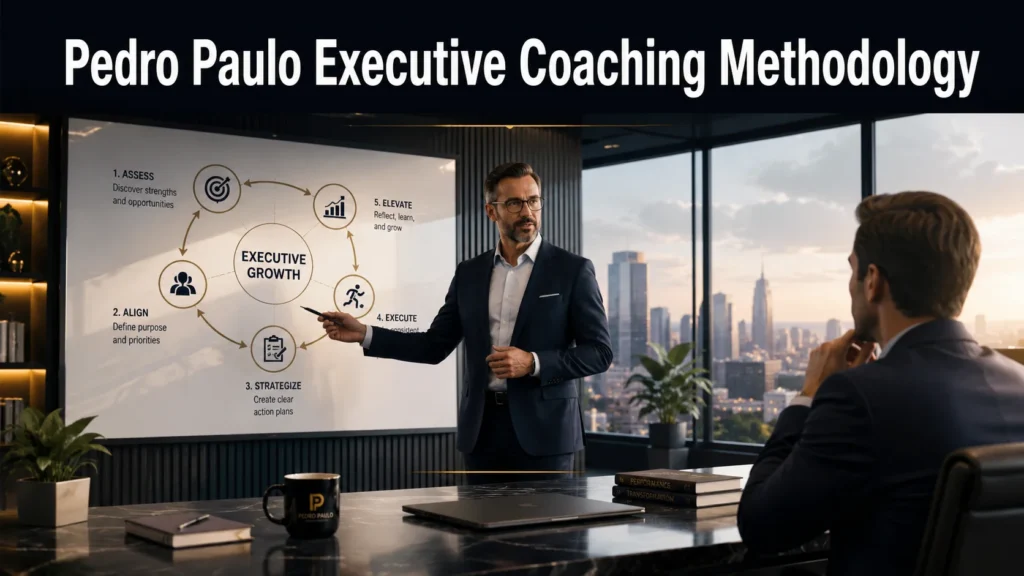
The methodology blends behavioral science, leadership psychology, and performance strategy. It’s structured, measurable, and outcome-driven.
Assessment and Diagnostics
Every engagement starts with clarity.
Tools include:
- Leadership style assessments
- Behavioral pattern analysis
- Stakeholder feedback reviews
- Performance gap identification
This phase reveals blind spots, strengths, and misalignments.
Goal Alignment
Coaching goals tie directly to business outcomes.
Examples:
- Improve executive decision velocity by 20%
- Reduce leadership team conflict
- Increase engagement scores
- Strengthen board-level communication
Execution and Accountability
Insights mean nothing without action. Coaching sessions focus on real-time leadership situations, not hypotheticals.
Feedback Loops
Progress gets measured continuously, ensuring behavioral change sticks.
Proven Leadership Frameworks Used in Coaching
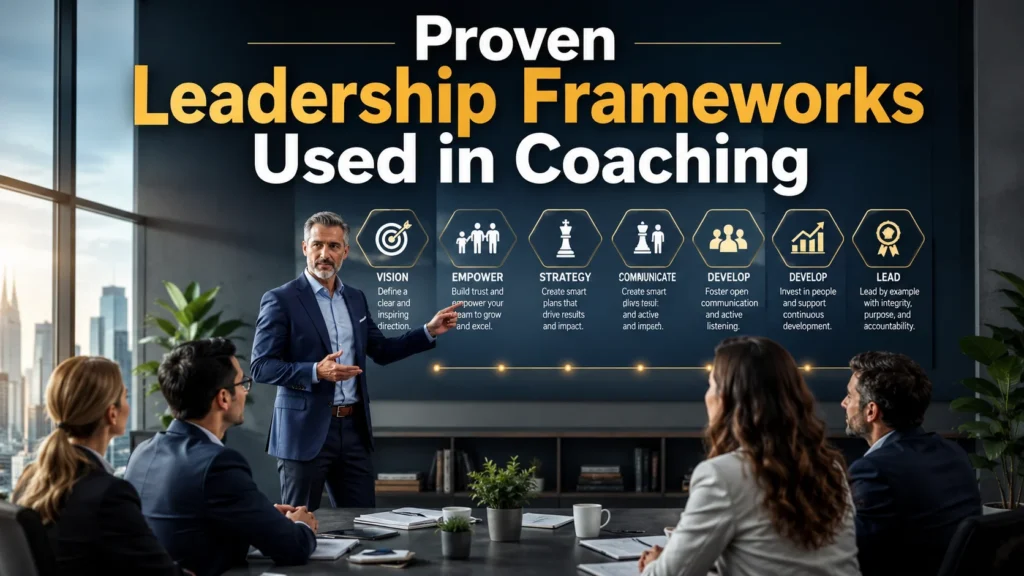
Pedro Paulo Executive Coaching applies frameworks that leaders can use immediately.
Behavioral Leadership Mapping
Identifies default leadership behaviors under stress.
Performance Gap Mapping
Highlights where intent and impact don’t align.
Strength-Based Leadership
Amplifies what leaders do well instead of “fixing” personality traits.
Emotional Intelligence Calibration
Improves self-awareness, empathy, and influence without becoming soft.
These frameworks create durable leadership habits, not temporary inspiration.
Leadership Strategies That Drive Real Change
Executive coaching sessions focus on strategies leaders can apply the same day.
Strategic Thinking Under Pressure
Leaders learn how to:
- Separate signal from noise
- Prioritize decisions that matter
- Avoid reactive leadership
Decision-Making Frameworks
Simple, repeatable models reduce hesitation and second-guessing.
Executive Presence
Presence isn’t charisma. It’s clarity, confidence, and consistency.
Leading Change Without Resistance
Change fails when leaders push instead of engage. Coaching teaches influence over force.
Conflict Management
Handled well, conflict strengthens teams. Avoided, it destroys trust.
How Executive Coaching Transforms Leadership Performance
Transformation isn’t theoretical. It’s visible.
Leaders experience:
- Faster decision cycles
- Stronger team alignment
- Reduced stress levels
- Improved stakeholder trust
Key Transformation Indicators
- Increased leadership confidence
- Clearer strategic communication
- Improved team accountability
- Higher engagement and retention
A Harvard Business Review study found that executives who received coaching showed improvements of up to 50% in leadership effectiveness scores within six months.
Executive Coaching vs Traditional Leadership Training
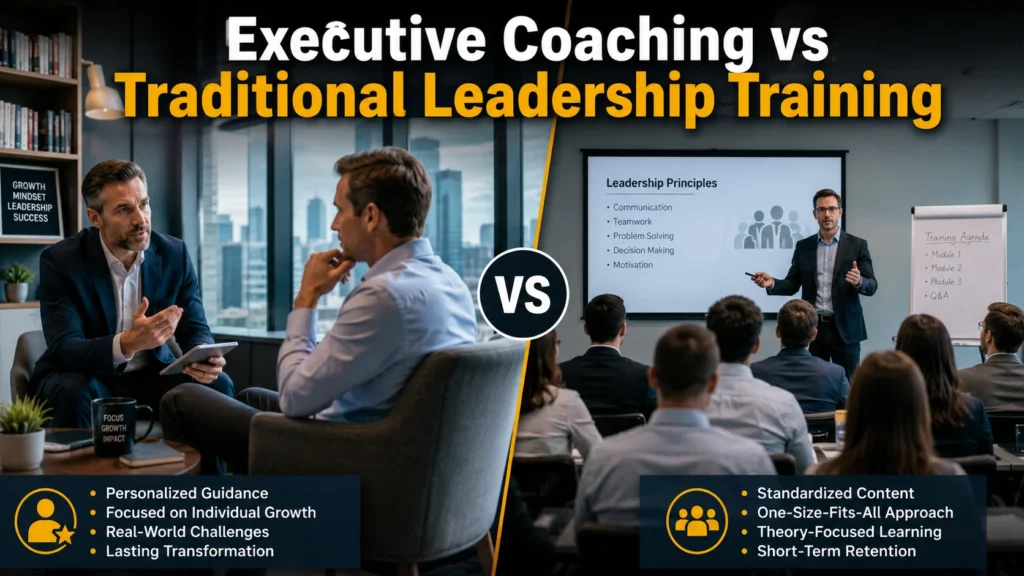
| Aspect | Executive Coaching | Leadership Training |
| Focus | Personalized leadership challenges | Generic skill development |
| Delivery | One-on-one, confidential | Group-based |
| Accountability | High and continuous | Limited |
| Impact | Behavioral change | Knowledge gain |
| Timeframe | Ongoing | Short-term |
Training teaches concepts. Coaching changes behavior.
Who Benefits Most from Pedro Paulo Executive Coaching
Executive coaching delivers the greatest impact for leaders facing complexity.
Ideal candidates include:
- CEOs and founders scaling fast
- Senior executives navigating transitions
- Leaders preparing for board-level roles
- High-potential executives stepping into bigger responsibilities
Coaching works best when leaders are capable, committed, and curious.
Real-World Applications of Coaching Strategies
Executive coaching isn’t abstract. It applies directly to real challenges.
Mergers and Acquisitions
Coaching helps leaders manage uncertainty, culture clashes, and communication breakdowns.
Rapid Growth
Scaling requires delegation, not control. Coaching shifts leadership mindset.
Crisis Leadership
Clear thinking and calm presence matter most under pressure.
Rebuilding Trust
Coaching supports leaders recovering from missteps or organizational conflict.
Also Read This: How My Best Hours Report Helps You Master Time Management
Measuring the ROI of Executive Coaching
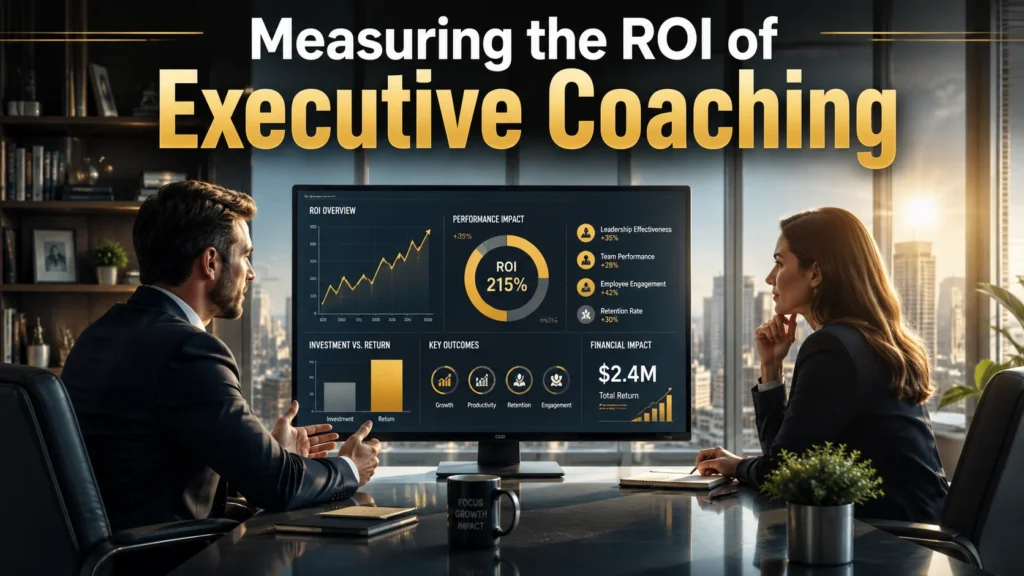
Executive coaching delivers measurable returns.
Common Metrics Used
- Revenue growth linked to leadership decisions
- Employee engagement scores
- Leadership effectiveness assessments
- Retention of top talent
According to PwC, 86% of organizations report recouping their coaching investment, with many exceeding expectations.
Why ROI Compounds
Leadership behaviors ripple through teams. Improvements multiply over time.
Common Myths About Executive Coaching
“Coaching Is Only for Struggling Leaders”
Top performers use coaching to stay sharp.
“Experience Replaces Coaching”
Experience without reflection reinforces habits, good or bad.
“Coaching Is Too Soft for Business”
Effective coaching is disciplined, data-driven, and results-focused.
These myths keep capable leaders stuck.
What Sets Pedro Paulo Executive Coaching Apart
Several factors distinguish this approach.
- Customized coaching, not templates
- Strong focus on execution
- Confidential, high-trust environment
- Long-term leadership sustainability
Coaching isn’t about fixing leaders. It’s about unlocking capacity.
How the Coaching Process Works
The process follows a clear structure.
Typical flow includes:
- Leadership assessment
- Goal definition
- Strategy development
- Regular coaching sessions
- Performance reviews
Sessions focus on current leadership realities, not theory.
Choosing the Right Executive Coach
Not all coaching delivers value.
Key factors to evaluate:
- Leadership experience, not just credentials
- Clear coaching methodology
- Industry understanding
- Ability to challenge thinking respectfully
The right coach doesn’t tell leaders what to do. They help leaders think better.
Faqs:
How long does executive coaching take?
Most engagements last between 6 and 12 months, depending on goals.
Is executive coaching confidential?
Yes. Confidentiality is foundational to effective coaching.
How often are coaching sessions held?
Sessions typically occur bi-weekly or monthly.
Can executive coaching work remotely?
Yes. Virtual coaching is highly effective and widely used.
When do leaders see results?
Many leaders notice changes within 60 to 90 days, with deeper transformation over time.
Conclusion:
Leadership shapes culture. Culture shapes results.
Pedro Paulo Executive Coaching provides leaders with clarity, confidence, and capability. The impact extends beyond individual performance into teams, organizations, and long-term success.
The strongest leaders don’t rely on instinct alone. They sharpen it.