
Whiskey isn’t just a drink, it’s an experience. And when someone orders whiskey neat, they’re asking for that experience in its purest form. But what does “neat” actually mean? Why do some whiskies shine this way while others don’t? And how do the pros approach a neat pour?
You’re about to get the full story—clear definitions, expert insight, tables, real examples, and practical tips you can use next time you order or pour.
Whiskey Neat Meaning: A Straight Answer
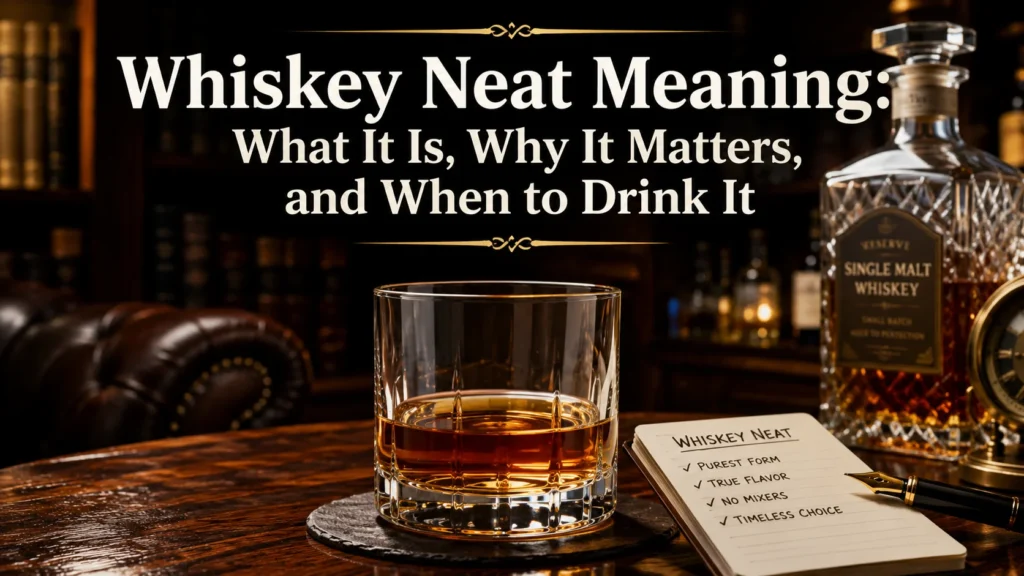
Whiskey neat means whiskey served plain, at room temperature, in a glass, with no ice, water, or mixers added. Simple? Yes. But this choice affects flavor, aroma, mouthfeel, and your overall experience.
- No ice
- No dilution
- No additional water or mixers
- Served at room temperature
In a bar, ordering “whiskey neat” tells the bartender you want just the spirit—nothing else.
Where the Term “Neat” Comes From
The term neat has roots in traditional bartending language. It originally meant something clean, orderly, or pure. When applied to drinks, neat came to mean unadulterated and unchanged from the bottle.
Bartenders started using this term in the early 20th century. By the mid-1900s, “neat” became a standard order in bars, especially for spirits like whiskey, bourbon, and rum.
This isn’t just old bartender jargon. It’s a precise term that avoids confusion. Without it, you might end up with whiskey on the rocks (with ice), with water, or mixed into a cocktail.
Why People Choose to Drink Whiskey Neat
Drinking whiskey neat isn’t just tradition. It’s a choice rooted in flavor and respect for the spirit’s craftsmanship.
Pure Flavor
When you drink whiskey neat you taste it exactly how the distiller intended. Here’s what that means:
- No ice dilutes it
- No water opens it prematurely
- Aromas stay strong
- Flavors stay concentrated
Distillery Craftsmanship
Whiskey makers spend years selecting grains, yeast strains, aging barrels, and aging conditions. When you drink whiskey neat you’re honoring that process.
Imagine comparing a fine aged wine served at perfect temperature with one diluted by ice. You’re not getting the same expression. Whiskey neat is similar.
Full Sensory Experience
Neat whiskey lets you:
- Smell the complex aroma
- Feel the body or texture
- Taste layered flavors
- Savor the finish
These nuances matter to enthusiasts and beginners alike.
What Ordering “Whiskey Neat” Tells the Bartender
When you order whiskey neat, you communicate a few things without saying a word:
- You know what you want
- You prefer full strength
- You’re not looking for a cocktail
- You want clarity of flavor
A bartender hearing “whiskey neat” won’t ask follow-up questions like:
“Do you want ice?”
“Do you want water?”
This saves time and keeps the pour precise.
How Whiskey Tastes When Served Neat
Drinking whiskey neat delivers a bold, honest flavor. Here are the common sensory features you’ll notice:
Flavor Intensity
Neat whiskey tastes stronger because nothing softens the ethanol (alcohol). You’ll notice:
- More pronounced spices
- Rich oak or smoke notes
- Sweetness from caramelized sugars
- Grain or malt forward flavor
Texture and Mouthfeel
Without dilution:
- The whiskey feels full-bodied
- Mouthfeel ranges from silky to oily
- Finish can be long and warming
Aroma (Nose)
When served neat, the full bouquet of aromas hits your nose:
- Fruity esters
- Vanilla and caramel
- Charred oak or smoke
- Spicy rye notes
When Whiskey Neat Might Not Be Ideal
Not every whiskey drinker loves whiskey neat—especially beginners. Here are cases where neat isn’t always ideal:
Harsh or Young Whiskey
Some unaged or low-quality whiskeys taste sharp or one-dimensional when neat. Ice or water can soften rough edges.
High Alcohol Content
Whiskeys over ~60% ABV (120+ proof) can feel like fire if tasted neat. Adding a drop of water can reduce heat.
Hot Days or Casual Settings
Sipping neat in a cold tasting room feels different than doing so outside in summer heat. Context matters.
Whiskey Neat vs Other Common Whiskey Orders
You’ll hear many ways to order whiskey. Here’s how neat stacks up.
Comparison Table
| Order Type | Ice? | Water? | Temperature | Dilution | Best For |
| Neat | No | No | Room Temp | None | Sippers and purists |
| On the Rocks | Yes | No | Cold | Yes | Softer flavor |
| With Water | No | Yes | Slightly diluted | Yes | New drinkers |
| Up | No | No | Chilled | None | Some cocktails |
| Splash of Water | No | Minimal | Slightly opened | Slight | Flavor unlocking |
Neat vs On the Rocks
- Neat: Full strength, bold flavor
- On the Rocks: Cooler, softer, slower release of flavor
Some people prefer rocks because the melting ice slowly opens up complexity.
Neat vs With Water
Adding a bit of water often helps unlock hidden flavors without chilling the whiskey.
Also Read This: MBN Meaning in Text 2026: Understanding, Tone, and Real-Life Usage
How to Properly Drink Whiskey Neat
You don’t have to be an expert to enjoy neat whiskey. Try these steps:
Best Glassware
- Glencairn Glass: Designed for nosing
- Rocks/Tumbler Glass: Casual and sturdy
Steps to Taste
- Pour 1–2 oz into your glass
- Swirl gently (opens aroma)
- Smell first before sipping
- Sip slowly
- Let it linger before swallowing
Let It Breathe
Give the whiskey 5–10 minutes to open up. Aromas and flavors evolve.
Common Mistakes People Make When Ordering Whiskey Neat
Even experienced drinkers slip up. Here are frequent mistakes:
- Expecting cold whiskey
- Drinking too fast
- Picking cheap whiskey and expecting depth
- Confusing “neat” with “straight” (they’re not identical)
- Not letting it breathe
Whiskey Neat Alternatives (And When to Choose Them)
If neat isn’t quite right for you, try these variations:
With a Splash of Water
Just a few drops can:
- Reduce alcohol heat
- Release deeper aromas
- Open up flavor complexity
One Large Ice Cube
This chills without quick dilution, cooling the whiskey slowly.
Whiskey Stones
These keep it cool but don’t add water. Use them if you don’t want dilution at all.
Chilled Glass
Cooling the glass itself gives a cooler sip without diluting the whiskey.
Is Whiskey Neat “Better” Than Other Ways to Drink Whiskey?
Some purists claim neat is the only real way to drink whiskey. That’s more opinion than fact.
Here’s the real takeaway:
Neat lets you experience the spirit most directly. But “better” depends on preference.
If you enjoy bold flavor and full expression, neat likely suits you. If you prefer a softer sip or milder aroma, water or ice might be right.
Don’t let terms like “neat” or “classic” make you feel boxed in. Whiskey is personal.
How to Order Whiskey Neat Like a Pro
Ordering doesn’t need to be awkward. Use these examples:
- “I’ll have a bourbon neat, please.”
- “Single malt Scotch neat.”
- “Ry e neat, no ice.”
You can add brand names if you know them:
- “Maker’s Mark neat.”
- “Glenfiddich 12-year neat.
If you’re unsure what to choose, ask the bartender:
“Can you recommend a whiskey that drinks well neat?”
Good bartenders will gladly suggest something based on your taste.
FAQS:
Is whiskey neat stronger than on the rocks?
Yes. Ice dilutes whiskey, lowering its intensity.
Does neat mean no ice at all?
Exactly—no ice, no chilled glass, no water.
Can beginners drink whiskey neat?
Yes, but beginners might add a splash of water to ease into it.
Is neat whiskey warm?
It’s served at room temperature—not warmed but not chilled either.
Does neat affect ABV (alcohol by volume)?
No—neat whiskey keeps its original ABV.
Conclusion:
Getting neat right is more than semantics. It’s about how you want to experience whiskey. When you pour it neat you:
- Respect the distiller’s craft
- Taste every nuance
- Enjoy authentic expression
Whiskey neat isn’t better for everyone, but it is the purest form of the spirit.
So next time you’re at a bar or pouring at home, remember:
Neat means pure, intentional, and full-flavored whiskey.
Sip slowly. Explore thoughtfully. Enjoy deeply.