
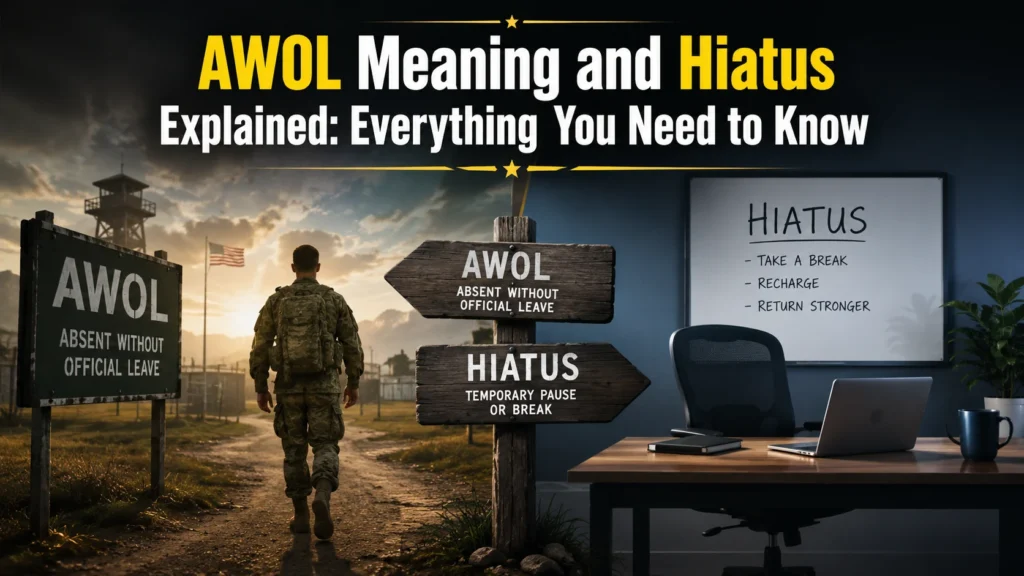

Have you ever heard someone say, “He went AWOL” or “The show is on hiatus” and wondered what it really means? These terms, though often casually thrown around, carry distinct meanings and consequences depending on the context. Whether in the military, workplace, or everyday life, understanding AWOL meaning and hiatus can save you confusion, misunderstandings, and even serious legal trouble.
In this article, we’ll break down these terms in simple language, explain their origins, explore real-world examples, and provide practical guidance for both individuals and organizations.
AWOL Meaning
AWOL stands for “Absent Without Leave”. The term originally comes from military jargon but has since been adapted in civilian life. It refers to someone leaving their duties or responsibilities without official permission.
What AWOL Stands For
- Military Origin: The term originated in the military to describe soldiers who leave their posts without authorization.
- Legal Basis: Being AWOL in the military is considered a disciplinary offense and can carry severe penalties.
- Everyday Usage: In civilian life, the term is used for people who skip work, school, or other responsibilities without notice.
The key point is absence without consent, which makes AWOL inherently negative.
AWOL in the Military Context
In the military, AWOL is taken seriously. Soldiers are expected to follow strict schedules, and unauthorized absences can compromise safety, operations, and trust.
Consequences of being AWOL in the military:
- Disciplinary Action: May include confinement, loss of rank, or pay deductions.
- Legal Implications: Extended AWOL can escalate to desertion, which is a criminal offense under military law.
- Impact on Career: Even short absences can leave a permanent mark on military records.
For example, a soldier absent for 48 hours without leave may face administrative punishment, while absence beyond 30 days often triggers a desertion charge.
AWOL in Civilian Life
Outside the military, the term AWOL is used more loosely but still signals unapproved absence.
Common examples:
- Employees skipping work without calling in
- Students missing classes repeatedly without notice
- Team members ignoring project deadlines unexpectedly
Even though the legal consequences are less severe in most workplaces, AWOL behavior can still harm reputations, trust, and career prospects.
Signs someone might be AWOL in a civilian context:
- No communication for several days
- Unexplained missed deadlines
- Avoiding meetings or responsibilities
Key Facts About AWOL
- Origin: 1914, United States military
- Full Form: Absent Without Leave
- Typical Duration: Any absence without prior approval
- Consequences: Vary by context—legal in the military, professional in workplaces
| Context | Definition | Consequence | Notes |
| Military | Leaving post without permission | Legal action, loss of pay/rank | >30 days = desertion |
| Workplace | Skipping work without notice | Disciplinary action, termination | Reputation damage possible |
| School/University | Missing classes without explanation | Academic penalties | Attendance record affected |
Hiatus Meaning
Unlike AWOL, a hiatus is a planned or voluntary break. It’s not about irresponsibility—it’s about intentional pauses for rest, health, or personal reasons.
What Hiatus Means
- Definition: A temporary interruption in activity or work
- Origin: Latin “hiatus,” meaning gap or opening
- Connotation: Neutral or positive, depending on the context
Hiatuses are common in creative, professional, and personal settings. They signal a pause, not an absence without permission.
Hiatus in Different Contexts
Entertainment:
- TV shows often go on hiatus between seasons
- YouTubers or podcasters may announce a hiatus to recharge creativity
Workplace:
- Employees may take sabbaticals or mental health breaks
- Planned leave for research, study, or career development
Personal Life:
- Social media breaks
- Temporary pauses in hobbies or personal projects
A hiatus can be strategic: it allows individuals to prevent burnout, focus on important tasks, or return with renewed energy.
Also Read This : Big Back Meaning: Understanding the Slang
AWOL vs Hiatus: The Key Differences
| Feature | AWOL | Hiatus |
| Permission | Unauthorized | Planned/approved |
| Connotation | Negative | Neutral or positive |
| Contexts | Military, workplace, school | Workplace, entertainment, personal |
| Duration | Often short but undefined | Typically defined, e.g., weeks/months |
| Consequences | Legal or disciplinary | Usually none if communicated |
Key takeaway: Going AWOL is often harmful, while taking a hiatus is strategic if managed properly.
Why People Go AWOL or Take a Hiatus
Understanding why someone goes AWOL or takes a hiatus helps prevent misunderstandings and manage expectations.
Common Reasons for AWOL
- Stress or burnout without official leave
- Avoiding disciplinary action or confrontation
- Personal emergencies that aren’t communicated
- Lack of engagement or motivation
Example: A soldier overwhelmed by deployment stress might leave without notice, resulting in AWOL. Similarly, an employee avoiding a performance review could be technically AWOL.
Common Reasons for Hiatus
- Mental or physical health recovery
- Creative recharge or professional development
- Life events: family care, travel, relocation
- Avoiding burnout: scheduled breaks can improve long-term productivity
Case Study:
A popular podcast took a three-month hiatus after the host experienced burnout. Upon returning, listener engagement increased by 40% due to improved content quality.
Consequences of AWOL vs Hiatus
Legal or Professional Consequences of AWOL
| Context | Consequences | Notes |
| Military | Confinement, loss of pay/rank, legal charges | >30 days absence = desertion |
| Workplace | Termination, suspension, reputation damage | Can affect career trajectory |
| Education | Failing grades, attendance penalties | Chronic absence may result in expulsion |
Effects of Hiatus
- Mostly positive: improves health, creativity, and focus
- Potential risks: missing deadlines if poorly planned
- Tip: Communicate break duration and expectations clearly
Example: Google allows employees to take sabbaticals every seven years, encouraging growth and preventing burnout.
How to Handle Someone Who Is AWOL or on Hiatus
Recognizing Warning Signs
- Frequent unexplained absences
- Avoiding communication
- Decline in performance
Strategies for Employers, Managers, or Teams:
- Communication: Reach out directly, confirm reasons
- Documentation: Track absences and agreements
- Support: Provide options for leave or mental health resources
- Set Clear Expectations: Clarify consequences of AWOL and protocols for hiatus
How to Take a Hiatus Without Going AWOL
- Notify stakeholders in advance: manager, team, or audience
- Plan workload coverage: delegate tasks or adjust deadlines
- Set a clear timeframe: define start and end dates
- Use the time wisely: rest, recover, or work on personal projects
- Communicate upon return: update colleagues or audience
Example Checklist for a Planned Hiatus:
- Inform supervisor/team
- Confirm leave is approved
- Plan task coverage
- Define break duration
- Set return expectations
FAQs:
1. Is AWOL illegal everywhere?
- AWOL is illegal in military settings worldwide. In civilian contexts, it’s usually a breach of policy, not criminal law.
2. Can taking a hiatus affect my career?
- If properly planned and communicated, a hiatus can be beneficial. Unplanned or hidden breaks may harm reputation.
3. How long can someone be AWOL before facing consequences?
- In the military, any absence without permission is AWOL. Consequences increase with duration, with desertion charges typically after 30 days.
4. Can a hiatus turn into an AWOL situation?
- Yes, if the break is taken without approval or communication, it can be considered AWOL in professional or academic settings.
5. Are there industries that encourage hiatuses?
- Yes. Tech companies, creative industries, and academia often offer sabbaticals or planned breaks to improve performance and retention.
Conclusion:
Understanding AWOL meaning and hiatus helps distinguish between unauthorized absences and planned breaks. AWOL carries negative implications, while a hiatus can provide recovery, creativity, and strategic advantage. The key is communication, planning, and accountability.
By recognizing the signs, planning responsibly, and knowing the consequences, you can navigate absences effectively—whether in the military, workplace, or personal life.
Remember: going AWOL without permission hurts you and others; taking a hiatus responsibly benefits everyone.