
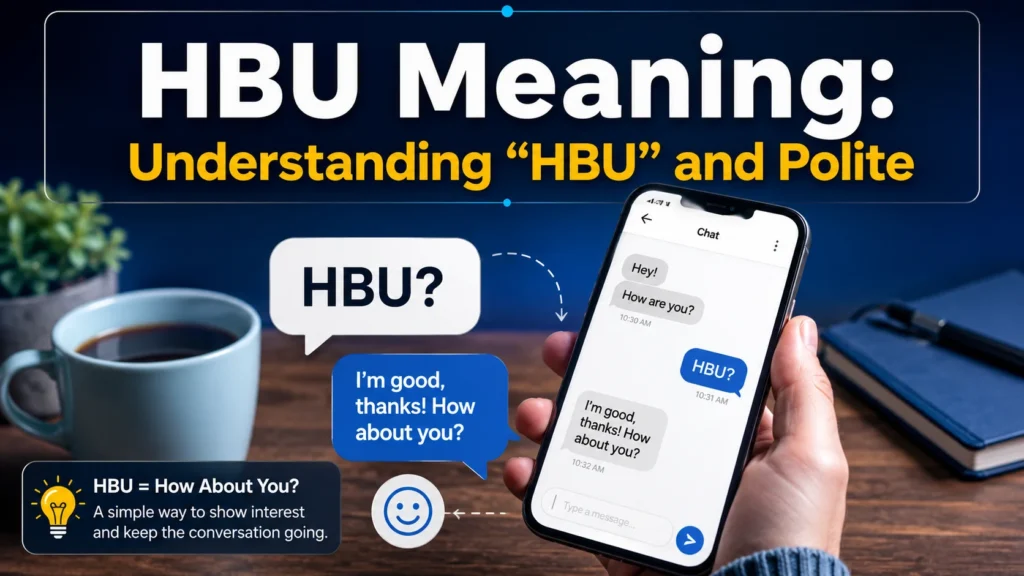

In the age of texting, social media, and instant messaging, acronyms rule our conversations. You’ve probably seen someone reply with “HBU?” and paused for a second, wondering, what does that even mean? Understanding acronyms like HBU isn’t just about knowing the letters—it’s about knowing the context, tone, and the best way to use it without sounding awkward.
In this article, we’ll dive deep into HBU meaning, when to use it, polite alternatives, and how to incorporate it smoothly into everyday conversations. Whether you’re chatting with friends, colleagues, or meeting new people online, this guide will give you all the insights you need.
What Does HBU Mean?
HBU stands for “How about you?” It’s a short, casual way to ask someone about themselves after sharing your own status or opinion. Think of it as the texting equivalent of asking, “And you?” in spoken conversation.
Origins of HBU:
HBU emerged with the rise of text messaging and social media platforms. As communication became faster and more casual, people started shortening phrases for convenience. Acronyms like LOL, BRB, and HBU allow people to keep conversations quick, concise, and informal.
Common Usage Examples:
- “I just finished my homework, HBU?”
- “Had a great weekend! HBU?”
- “I’m feeling good today, HBU?”
Notice how HBU always follows a statement about yourself, creating a reciprocal conversation.
When to Use HBU
Using HBU in the right context is key. While it’s common, misusing it can make your conversation seem abrupt or overly casual. Here’s a practical breakdown:
Appropriate Situations:
- Casual chats with friends or peers.
- Group text conversations where brevity is appreciated.
- Social media DMs when responding to a personal update.
Situations to Avoid:
- Professional emails or formal workplace chats.
- Messaging someone you barely know.
- Situations where tone might be misread, such as conflict or serious discussions.
Example:
Friend: “I just got a promotion!”
You: “Congrats! HBU? How’s your week been otherwise?”
Tip: Pair HBU with friendly emojis like 🙂 or 😄 to make it warmer and more approachable.
Polite Alternatives to HBU
Sometimes, “HBU” might feel too abrupt or informal. Knowing polite alternatives can make you sound thoughtful without losing the conversational flow.
For Friends and Peers:
- “How about yourself?”
- “What about you?”
- “And you?”
For Semi-Formal or Professional Settings:
- “And how are you?”
- “What’s your perspective?”
- “May I know your thoughts?”
Quick Comparison Table:
| Acronym / Phrase | Context | Tone | Example |
| HBU | Casual texting | Friendly, brief | “Just finished lunch, HBU?” |
| How about yourself | Friendly | Thoughtful | “I’m doing well, how about yourself?” |
| What about you | Casual/peer | Neutral | “I love the movie, what about you?” |
| And how are you | Professional/semi-formal | Polite | “I completed the project, and how are you?” |
| May I know your thoughts | Formal/professional | Respectful | “I’ve sent my proposal, may I know your thoughts?” |
These alternatives ensure your conversations remain polite and clear, especially if you’re unsure whether the other person is familiar with acronyms.
Also Read This : Abracadabra & Modern Meaning Every Tone: History, Usage
How HBU Can Be Misinterpreted
Although HBU is widely recognized among younger audiences, it can sometimes cause confusion. Misinterpretations usually stem from:
- Unfamiliarity: Older generations or non-native English speakers may not know the abbreviation.
- Abrupt tone: A plain “HBU?” can seem curt if context or tone is missing.
- Context mismatch: Using HBU in professional emails can make you appear careless or informal.
Solutions:
- Add a friendly emoji to soften the tone: “HBU? 🙂”
- Pair with context: “I’m feeling great today. HBU? Any plans for the weekend?”
- Use the full phrase in professional conversations: “I completed the report, how about you?”
Case Study Example:
A marketing professional sent the message:
“Finished the analysis, HBU?”
The recipient misread it as curt and ignored it. Using:
“Finished the analysis. How about you? Looking forward to your update.”
fixed the tone and elicited a polite reply.
Texting Tips: Using HBU Smoothly
To keep your conversations flowing, use HBU with a few practical texting tips:
- Timing: Avoid using it repeatedly in short messages; it can seem robotic.
- Pair with other questions: Follow up with something engaging:
“I had a busy day. HBU? Any exciting news?” - Add tone markers: Emojis or punctuation can help convey friendliness.
- Avoid using alone: Don’t text just “HBU?” without context—it can feel abrupt.
Quick Tips List:
- ✅ Use HBU after sharing about yourself.
- ✅ Keep messages friendly with emojis or punctuation.
- ✅ Use full phrasing in professional or formal chats.
- ❌ Avoid overusing or sending alone without context.
Popular Variations and Similar Acronyms
Texting culture has several acronyms similar to HBU. Understanding these can help you navigate chats confidently.
Common Variations:
- WBU – “What about you?” (used interchangeably with HBU in some regions)
- WYD – “What are you doing?” (more casual, inquiry-focused)
- HMU – “Hit me up” (invites a response or contact)
Comparison Table:
| Acronym | Meaning | Tone | Example |
| HBU | How about you? | Friendly | “I’m doing well, HBU?” |
| WBU | What about you? | Neutral | “I enjoyed the movie, WBU?” |
| WYD | What are you doing? | Casual | “Hey! WYD tonight?” |
| HMU | Hit me up | Informal, social | “HMU if you want to grab coffee” |
Knowing subtle differences ensures your messages are appropriate, context-aware, and clear.
FAQs:
1: Is HBU formal or informal?
HBU is informal and best suited for casual conversations. Use full phrases in professional or formal messages.
2: Can HBU be used in professional emails?
Not recommended. Instead, use alternatives like “How about yourself?” or “And how are you?”
3: What’s the difference between HBU and WBU?
Both mean similar things. HBU = “How about you?” WBU = “What about you?” HBU feels slightly more personal, WBU is more neutral.
4: Can older people understand HBU?
Not always. Some may not be familiar with texting acronyms, so clarity is key in mixed-age conversations.
5: How do I use HBU without sounding abrupt?
Pair it with a context statement, use punctuation or emojis, and avoid sending it alone. For example:
Conclusion:
HBU meaning is simple yet powerful. It’s a quick way to ask about someone in casual texting, keeping conversations light and engaging. Using polite alternatives ensures your tone remains thoughtful, especially in professional or semi-formal settings.
Key Takeaways:
- HBU = “How about you?”
- Use in casual chats and pair with emojis for friendliness.
- Avoid using in professional emails—opt for full phrases.
- Know similar acronyms to navigate online conversations.
By understanding HBU and its alternatives, you can communicate effectively, politely, and naturally—whether texting friends, colleagues, or new contacts online.