
People often see “WYF” in texts, TikTok comments, Snapchat messages, or gaming chats and wonder what it means. Like many internet abbreviations, the phrase changes slightly depending on tone, age group, and platform. Still, most Americans today use it casually in online conversation.
The WYF meaning usually relates to quick digital communication. It reflects how modern texting favors speed, short phrases, and emotional shorthand. In the United States, slang acronyms like WYF became especially common during the rise of smartphones, group chats, and social media apps.
Today, WYF can sound friendly, curious, flirtatious, or even suspicious depending on context. Because of that, understanding the phrase involves more than just memorizing letters. It also helps to know how people communicate online and what emotional signals these abbreviations carry.
Quick Answer
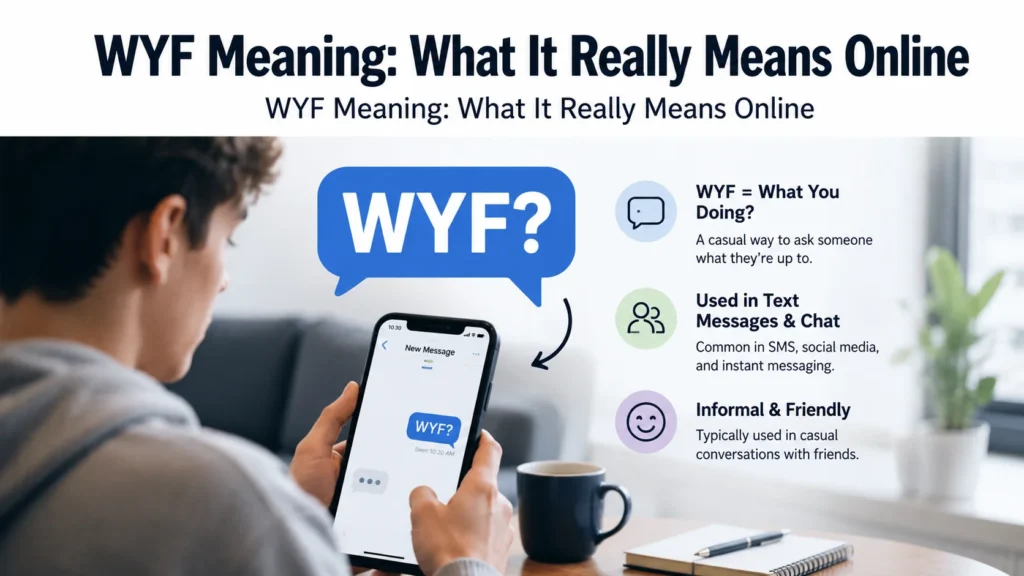
WYF meaning in text usually stands for “Where You From?” in American online slang. People use it in chats, dating apps, gaming communities, and social media to ask someone about their location or background in a casual way.
In some conversations, WYF can also mean “What’s Your Favorite?” although that version is less common today.
TL;DR
• WYF usually means “Where You From?”
• It became popular through texting and social media.
• Tone changes depending on context and relationship.
• Americans often use it casually or flirtatiously.
• WYF reflects fast modern digital communication.
• Alternative meanings exist but are less common.
What Does WYF Mean?
WYF is a short internet abbreviation mainly used in texting and online messaging. Most commonly, it means “Where You From?” This quick phrase helps people ask about someone’s hometown, state, country, or general background.
Because texting culture values speed, many phrases became shortened into initials. WYF fits that pattern perfectly. Instead of typing a full sentence, users send three letters.
WYF as “Where You From?”
This is the most recognized meaning in the United States today. People often use it early in a conversation.
Common situations include:
• Starting conversations on dating apps
• Joining gaming or Discord communities
• Talking with new social media followers
• Meeting online friends through TikTok or Instagram
• Casual texting between teenagers and young adults
The tone can feel friendly, curious, or flirtatious depending on wording.
For example:
• “Hey, WYF?”
• “WYF originally?”
• “WYF lol you sound Southern”
Less Common Meaning: “What’s Your Favorite?”
Some users also use WYF to ask about preferences.
Examples include:
• “WYF movie?”
• “WYF song right now?”
• “WYF fast food place?”
However, this meaning appears less often in current American slang.
The Rise of Internet Acronyms in America
To understand WYF fully, it helps to look at the bigger history of internet shorthand. Americans began heavily using abbreviations during the early texting era of the late 1990s and early 2000s.
Back then, flip phones limited character counts. Typing took longer, so people shortened phrases naturally.
Early Digital Slang Culture
Popular abbreviations from that era included:
• LOL for “laugh out loud”
• BRB for “be right back”
• IDK for “I don’t know”
• SMH for “shaking my head”
• WYD for “what you doing”
WYF later joined this growing family of internet slang.
Why Americans Embraced Text Shortcuts
Several cultural changes helped slang grow quickly:
• Smartphones increased daily messaging habits
• Social media encouraged faster communication
• Youth culture rewarded humor and creativity
• Online gaming created global conversations
• Character limits shaped shorter writing styles
Today, abbreviations feel normal across many age groups.
WYF Meaning in Text Messages
In texting, WYF usually appears as a casual question. Unlike formal language, texting slang often removes grammar rules and punctuation.
Because of this, WYF feels relaxed and conversational.
Common Texting Examples
Here are typical ways Americans use WYF in messages:
• “WYF?”
• “Yo WYF?”
• “Wait WYF originally?”
• “WYF bro?”
• “WYF you got an accent?”
The exact meaning depends on context and tone.
Emotional Tone Behind WYF
Interestingly, the same acronym can send different emotional signals.
| Context | Meaning in the USA | Emotional Tone | Notes |
| New conversation | Asking location | Curious | Often friendly |
| Dating apps | Learning background | Flirty | Sometimes personal |
| Gaming chats | Asking nationality | Social | Community-building |
| Group texts | Casual conversation | Relaxed | Informal tone |
| Suspicious questioning | Demanding identity | Aggressive | Depends on wording |
Because tone matters online, punctuation and emojis can also change interpretation.
WYF on Snapchat, TikTok, and Instagram
Social media helped WYF spread faster across American culture. Apps like Snapchat and TikTok especially reward fast, informal communication.
Young users often prefer short phrases because they match the quick pace of scrolling and messaging.
Snapchat Usage
On Snapchat, WYF often appears in:
• Private chats
• Story replies
• Quick introductions
• Flirty conversations
• Anonymous question features
Because Snapchat messages disappear, communication there tends to feel more spontaneous.
TikTok and Comment Culture
TikTok comments also popularized slang abbreviations. Users reply quickly and casually, often without punctuation.
You may see comments like:
• “WYF you sound British”
• “WYF that accent is cool”
• “WYF I need friends there”
These phrases mix curiosity with humor and social connection.
Instagram and Online Identity
On Instagram, WYF sometimes acts as a conversation starter after following someone new.
It may signal:
• Interest in someone’s lifestyle
• Curiosity about regional culture
• Attraction or flirting
• Shared identity or community
Because identity matters strongly online, location-based questions became socially important.
Why WYF Feels Personal
Although WYF seems simple, it can feel surprisingly personal. Asking where someone is from touches identity, culture, and belonging.
In the United States especially, regional identity matters deeply.
American Regional Identity
Americans often connect personality with geography.
People associate regions with:
• Southern hospitality
• New York directness
• California creativity
• Midwest friendliness
• Texas pride
So when someone asks “WYF,” they may also ask about lifestyle and culture indirectly.
Digital Identity and Belonging
Online spaces encourage people to search for connection.
WYF can help users find:
• Shared hometowns
• Similar accents
• Cultural similarities
• Common experiences
• Mutual communities
That emotional layer makes the phrase feel more meaningful than a simple location question.
The Psychology Behind Slang Abbreviations
Internet slang works psychologically because it creates belonging. Shared abbreviations help people feel part of a group.
WYF reflects that social pattern clearly.
Why People Use Slang Online
Shortened phrases can signal:
• Comfort with internet culture
• Informal friendliness
• Youth identity
• Digital fluency
• Group membership
Using slang correctly often helps people fit into online communities faster.
Fast Language and Emotional Speed
Modern internet culture moves quickly. Abbreviations save time and create emotional immediacy.
Instead of formal wording, people choose shorter expressions because they feel:
• Faster
• More casual
• More authentic
• More emotional
• Less distant
That shift changed how Americans communicate digitally.
Also Read This: What Does GNG Mean in Texting? Real Meaning Explained
WYF and Online Flirting
One major reason WYF became popular is online flirting. Dating culture on apps and social media often starts with short questions.
WYF works as an easy opener.
Why It Appears on Dating Apps
People use WYF to learn:
• Whether someone lives nearby
• Cultural background
• Shared hometown experiences
• Compatibility and lifestyle
The question feels simpler than asking detailed personal information immediately.
Flirty vs Friendly Usage
Tone changes everything online.
A friendly WYF may sound like:
• “WYF? I like your vibe.”
A flirtier version may sound like:
• “WYF? You cute 😅”
Because text lacks facial expressions, interpretation depends heavily on wording.
Alternative Meanings of WYF
Although “Where You From?” dominates modern usage, WYF has other meanings in smaller communities.
These meanings vary by platform and age group.
“What’s Your Favorite?”
This version appears in entertainment discussions.
Examples include:
• Music fandoms
• Movie conversations
• Gaming communities
• Sports debates
However, most Americans still interpret WYF as “Where You From?” first.
Rare or Niche Interpretations
Some online groups invent temporary meanings for slang. These often fade quickly.
Internet language changes because:
• Trends move fast
• Platforms influence vocabulary
• Younger users reshape slang constantly
• Memes create temporary meanings
As a result, context always matters.
Cross-Cultural Meaning of Location Questions
Asking where someone comes from exists in nearly every culture. However, different societies attach different emotional meanings to the question.
In America, the phrase often feels casual and social.
Cultural Differences
In some cultures, location questions suggest:
• Family identity
• Ethnic heritage
• Language background
• Social class
• National pride
Meanwhile, American internet culture usually treats WYF informally.
Online Globalization
Because online communities are international, WYF now crosses cultures daily.
Gamers, creators, and influencers use it to connect globally. However, misunderstandings sometimes happen when cultural expectations differ.
WYF in Pop Culture and Memes
Internet slang spreads fastest through memes, influencers, and viral trends. WYF benefited from this modern digital ecosystem.
Short phrases work especially well in meme culture.
Meme Communication
Memes favor language that is:
• Fast to read
• Easy to repeat
• Emotionally recognizable
• Flexible across situations
WYF fits perfectly into that style.
Music and Influencer Culture
American music culture also shaped online slang heavily. Rap, streaming culture, and influencer language helped normalize abbreviations in everyday speech.
Young audiences often copy phrases from:
• TikTok creators
• Twitch streamers
• YouTubers
• Online celebrities
• Viral videos
That constant repetition keeps slang alive.
Misunderstandings and Controversies Around WYF
Like many internet phrases, WYF sometimes creates confusion. Tone, age, and culture all affect interpretation.
Most uses are harmless, but misunderstandings happen.
When WYF Feels Invasive
Some people dislike location questions online because they feel too personal.
Potential concerns include:
• Privacy worries
• Safety concerns
• Unwanted flirting
• Stereotyping assumptions
• Pressure to reveal identity
Because of this, some users avoid answering directly.
Slang and Generational Gaps
Older adults may not recognize abbreviations immediately. Meanwhile, younger users often assume everyone understands them.
This gap can create:
• Miscommunication
• Awkward conversations
• Confusion in workplaces
• Different interpretations of tone
Digital language changes faster than traditional language norms.
How WYF Reflects Modern American Communication
WYF symbolizes broader changes in how Americans communicate online. It shows the shift toward fast, emotionally efficient conversation.
Short phrases now carry large social meaning.
Communication Became More Immediate
Compared with earlier generations, modern texting feels:
• Faster
• More visual
• More emotional
• Less formal
• More identity-focused
WYF reflects all those changes at once.
The Future of Internet Slang
Internet language constantly evolves. Some abbreviations disappear while others become mainstream vocabulary.
WYF may continue changing because:
• Platforms evolve rapidly
• Younger generations create new slang
• AI and digital culture reshape communication
• Global audiences influence American slang
Language online never stays still for long.
FAQs
What does WYF mean in texting?
Most commonly, WYF means “Where You From?” People use it casually in texts, social media chats, and online communities.
Is WYF flirtatious?
Sometimes. On dating apps or Snapchat, WYF can sound flirtatious because it starts personal conversation. However, many people also use it casually.
What does WYF mean on TikTok?
On TikTok, WYF usually asks where someone is from. Users often say it after hearing an accent or seeing regional content.
Does WYF have multiple meanings?
Yes. Although “Where You From?” is most common, some users also mean “What’s Your Favorite?”
Is WYF considered rude?
Usually no. However, tone matters. Some people may feel uncomfortable sharing location details online with strangers.
Why do people use abbreviations like WYF?
People use abbreviations because they save time and feel casual. Internet culture also encourages fast, emotionally direct communication.
Conclusion:
WYF meaning in modern American culture goes beyond a simple abbreviation. While it usually means “Where You From?”, the phrase also reflects identity, curiosity, connection, and the fast pace of online communication.
Today, WYF appears across texting apps, gaming spaces, TikTok comments, and social media conversations. Its popularity shows how digital culture reshaped language into something shorter, faster, and more emotionally flexible.
At the same time, the phrase reminds us that even tiny internet expressions can carry social meaning. A simple three-letter question can reveal curiosity, attraction, humor, or the desire to belong in an increasingly connected online world.