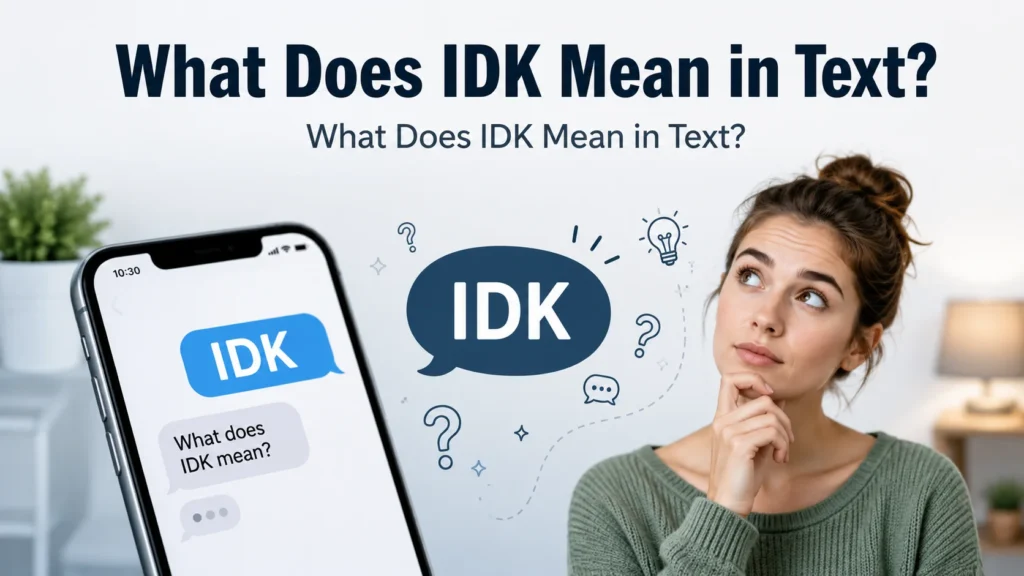

What does IDK mean in text? A Complete Guide (2026 Update) explores one of the internet’s most common abbreviations. Even people who rarely text have likely seen “IDK” in messages, comments, or social media captions.
Today, IDK appears everywhere in American digital culture. Teenagers use it in group chats. Adults use it in work messages. Brands even use it in marketing to sound casual and relatable. Because online language changes quickly, many readers want to understand what this short phrase actually means and how people use it today.
Although IDK looks simple, it also reflects larger shifts in communication. It shows how texting changed language, shortened conversations, and created new ways to express emotion online. In the United States especially, abbreviations like IDK became part of everyday speech, not just internet slang.
Quick Answer
“What Does IDK Mean in Text? A Complete Guide (2026 Update)” centers on the meaning of IDK, which usually stands for “I don’t know.” In the USA, people use it to express uncertainty, hesitation, confusion, or casual honesty in texts and online conversations.
Depending on tone and context, IDK can sound relaxed, sarcastic, shy, frustrated, or emotionally distant.
TL;DR
• IDK usually means “I don’t know.”
• It became popular through texting and internet culture.
• Americans use it casually in daily digital conversations.
• Tone changes its meaning dramatically.
• IDK can signal uncertainty, humor, or emotional distance.
• The phrase remains common across generations in 2026.
What Does IDK Mean?
The Basic Definition
IDK is a texting abbreviation for “I don’t know.” People use it to answer questions quickly without typing the full sentence.
It became popular because texting originally had character limits and slower keyboards. Short forms saved time and effort. However, over time, abbreviations like IDK became cultural habits instead of simple shortcuts.
Today, IDK appears in:
• Text messages
• TikTok comments
• Instagram captions
• Snapchat chats
• Online gaming
• Workplace messaging apps
• Meme culture
How People Usually Use It
In most situations, IDK sounds casual and conversational. The meaning often depends on punctuation, capitalization, or emojis.
For example:
• “idk lol” sounds playful
• “IDK.” can sound cold or annoyed
• “IDKKKK” may express dramatic confusion
• “idk maybe” feels uncertain or shy
Because tone matters online, small details completely change how readers interpret the message.
The History of IDK
Early Internet Origins
IDK became common during the late 1990s and early 2000s. During that era, people used AOL Instant Messenger, internet chatrooms, and early SMS texting.
At the time, phones had limited keyboards. Users pressed number keys repeatedly to type letters. Naturally, shorter phrases became popular.
Other abbreviations from the same era included:
• BRB (“be right back”)
• LOL (“laughing out loud”)
• OMG (“oh my God”)
• TBH (“to be honest”)
• BTW (“by the way”)
Although many old internet phrases disappeared, IDK survived because it remained useful in everyday speech.
The Rise of Texting Culture
American texting culture shaped IDK’s popularity. Unlimited texting plans expanded in the mid-2000s, especially among teenagers.
As smartphones spread, abbreviations became symbols of online identity. Using terms like IDK signaled familiarity with internet culture and digital communication.
Eventually, people started saying “I-D-K” aloud in real conversations. That shift showed how internet language crossed into spoken American English.
Why IDK Became So Popular in America
Fast Communication
Americans value speed and convenience in digital communication. IDK fits perfectly into modern texting habits because it’s short and emotionally flexible.
Instead of writing a long explanation, users can simply type:
• “IDK yet”
• “idk honestly”
• “IDK what happened”
These responses feel quick and natural.
Casual Communication Styles
American online culture often favors informal language. Even workplaces now use casual messaging styles in apps like Slack or Microsoft Teams.
Because of this shift, abbreviations no longer feel unprofessional in many situations. IDK became part of modern conversational English rather than niche internet slang.
Influence of Social Media
Social platforms accelerated the spread of IDK across age groups. TikTok, YouTube, Instagram, and meme pages normalized abbreviated speech.
Today, creators often use IDK to sound:
• Relatable
• Funny
• Emotionally honest
• Unsure
• Self-aware
That emotional flexibility keeps the phrase culturally relevant.
Emotional Meanings Behind IDK
Uncertainty and Hesitation
At its core, IDK expresses uncertainty. However, emotionally, it often suggests more than simple confusion.
For example, someone might use IDK because they:
• Feel overwhelmed
• Want to avoid conflict
• Aren’t ready to answer
• Feel socially awkward
• Need more time to think
Because texting removes facial expressions, readers often interpret emotional meaning from short phrases like IDK.
Emotional Distance
Sometimes IDK acts as a protective response. Instead of discussing feelings openly, people may hide behind vague answers.
For example:
“Are you upset?”
“idk.”
In this case, the phrase may signal discomfort rather than literal uncertainty.
Humor and Irony
Modern internet culture also uses IDK humorously. Memes often exaggerate confusion or indecision.
For example:
• “IDK man, life’s weird.”
• “IDK anymore 💀”
• “IDK but I support it.”
This ironic style became especially common among Gen Z users.
Different Ways People Type IDK
Capitalization Changes Tone
Small visual changes affect meaning online.
| Style | Common Tone | Typical Meaning | Notes |
| IDK | Neutral | Simple uncertainty | Standard version |
| idk | Casual | Relaxed conversation | Most common today |
| IDK. | Cold or serious | Frustration or finality | Period changes tone |
| IDKKK | Dramatic | Emotional confusion | Common in memes |
| idk lol | Lighthearted | Friendly uncertainty | Softens the response |
Because digital language lacks body language, visual formatting matters more than many people realize.
Emoji Pairings
People frequently combine IDK with emojis to clarify emotion.
Common examples include:
• “idk 🤷” for uncertainty
• “IDK 😂” for humor
• “idk tbh” for honesty
• “idk 😭” for dramatic frustration
These combinations help replace facial expressions in digital communication.
IDK in American Pop Culture
Memes and Viral Humor
IDK became deeply connected to meme culture during the 2010s and 2020s. Online humor increasingly focused on confusion, irony, and emotional unpredictability.
As a result, phrases like “idk anymore” became symbolic of internet humor itself.
Many memes use IDK to express:
• Existential jokes
• Social awkwardness
• Modern stress
• Emotional burnout
• Chaotic humor
Music and Entertainment
Artists, influencers, and streamers often use IDK in titles, lyrics, and captions. The phrase feels conversational and emotionally open.
Additionally, younger audiences connect with language that sounds natural rather than polished.
Everyday Speech
Some Americans now say “I-D-K” aloud instead of the full sentence. That habit shows how deeply internet slang entered spoken culture.
This shift resembles how people also say:
• “LOL” aloud jokingly
• “OMG” in conversation
• “TBH” in casual speech
Also Read This: What Does JP Mean in Text? A Complete 2026 Guide
Psychological Meaning of IDK
Avoiding Pressure
Psychologically, IDK sometimes protects people from social pressure. A vague answer can reduce responsibility or avoid emotional conflict.
For example, teenagers may use IDK when they fear judgment or criticism.
Identity and Self-Expression
Online language often signals personality. Some people use lowercase “idk” to appear relaxed or emotionally detached.
Others intentionally exaggerate phrases like “IDKKKKK” for dramatic humor.
Because of this, IDK became more than an abbreviation. It also became a style marker within internet culture.
Modern Anxiety and Ambiguity
Many researchers note that younger generations increasingly communicate through uncertainty-based humor. Phrases like “idk” reflect modern feelings of unpredictability and social anxiety.
That doesn’t mean the phrase is unhealthy. Instead, it often acts as a shared emotional shorthand online.
IDK Across Generations
Millennials and Early Internet Users
Millennials helped popularize IDK during the rise of instant messaging and flip phones.
For many Americans in their 30s and 40s, the phrase feels nostalgic because it connects to early internet culture.
Gen Z Usage
Gen Z expanded IDK into emotional and comedic territory. Today, tone matters more than literal meaning.
Common Gen Z uses include:
• Dry humor
• Irony
• Emotional exaggeration
• Self-aware confusion
• Casual vulnerability
Older Adults and Mainstream Use
Even older adults now understand IDK because it became mainstream. Parents, teachers, and workplaces regularly encounter the phrase.
That broad acceptance shows how internet slang evolved into everyday language.
Cross-Cultural Meanings and Global Use
Beyond the United States
Although IDK grew mainly through English-speaking internet culture, it spread internationally through social media.
People worldwide now recognize the abbreviation, especially in online gaming and entertainment spaces.
Translation Challenges
Interestingly, some languages use local abbreviations instead of IDK. However, English internet slang often crosses cultural boundaries because of global media influence.
As a result, IDK sometimes appears even in non-English conversations online.
Digital Language as Global Culture
Modern internet culture created a shared digital vocabulary. Terms like IDK connect users across countries, generations, and communities.
However, meanings can still vary depending on local humor and communication styles.
Common Misunderstandings About IDK
It Doesn’t Always Mean Ignorance
Some people assume IDK means someone lacks knowledge. In reality, the phrase often expresses emotional uncertainty instead.
For example:
• “IDK how I feel.”
• “idk what to do.”
• “IDK if that’s right.”
These responses reflect emotional complexity, not lack of intelligence.
Tone Can Create Conflict
Because text lacks vocal tone, IDK sometimes appears rude unintentionally.
For example:
“Do you care?”
“idk.”
Without context, the reply may feel dismissive.
Workplace Misinterpretations
In professional settings, IDK may appear overly casual. Some managers prefer clearer communication.
However, workplace messaging norms changed significantly since 2020. Many offices now accept casual abbreviations in internal chats.
IDK in Social Media and Online Identity
TikTok and Meme Culture
TikTok heavily influenced modern IDK usage. Creators often use the phrase in captions to sound authentic and emotionally honest.
Examples include:
• “idk why this is funny”
• “idk who needs this”
• “idk anymore honestly”
This style feels conversational rather than polished.
Branding and Marketing
Brands increasingly use internet slang to appear relatable. Companies sometimes include IDK in memes or social posts targeting younger audiences.
However, forced slang can feel awkward if it sounds unnatural.
Online Persona and Style
Certain typing styles now signal personality online.
For example:
• Lowercase typing feels softer
• Extra letters feel emotional
• Short responses feel detached
• Emojis create emotional clarity
Because of this, IDK communicates mood as much as meaning.
Has the Meaning of IDK Changed Over Time?
From Literal to Emotional
Originally, IDK simply meant “I don’t know.” Over time, online culture expanded its emotional meaning.
Today, the phrase may communicate:
• Anxiety
• Humor
• Detachment
• Exhaustion
• Casual honesty
The Influence of Internet Humor
Modern humor often centers on uncertainty and irony. Because of this shift, IDK became emotionally layered.
For younger users especially, tone and context matter more than dictionary definitions.
Why IDK Still Matters in 2026
Many internet abbreviations faded away. However, IDK survived because uncertainty remains universal.
People still need quick ways to express confusion, hesitation, or emotional ambiguity. IDK continues filling that role naturally.
FAQs
What does IDK stand for in texting?
IDK usually stands for “I don’t know.” People commonly use it in casual digital conversations, especially texts and social media messages.
Is IDK considered rude?
Not always. However, tone matters greatly in texting. A short “IDK.” with a period may sound cold, while “idk lol” feels friendlier.
Do adults use IDK too?
Yes. Although younger users popularized it, adults regularly use IDK in personal and workplace messaging today.
Why do people type “idk” in lowercase?
Lowercase typing often feels softer and more casual online. Many users think it sounds more relaxed and emotionally natural.
Is IDK still popular in 2026?
Yes. IDK remains one of the internet’s most widely used abbreviations because it’s flexible, quick, and emotionally expressive.
Can IDK mean something sarcastic?
Sometimes. Depending on context, IDK may signal irony, annoyance, or playful humor rather than literal uncertainty.
Conclusion
IDK may look like a tiny internet abbreviation, but its cultural meaning is surprisingly large. Originally created for faster typing, the phrase evolved into a flexible emotional tool used across American digital life.
Today, What Does IDK Mean in Text? A Complete Guide (2026 Update) reflects more than simple uncertainty. The phrase can express humor, hesitation, emotional distance, honesty, or modern internet irony depending on context and tone.
As online communication keeps evolving, IDK remains part of everyday language because it captures something deeply human: uncertainty. Whether it appears in memes, texts, or casual conversations, the phrase continues helping people communicate quickly, emotionally, and authentically in the digital age.