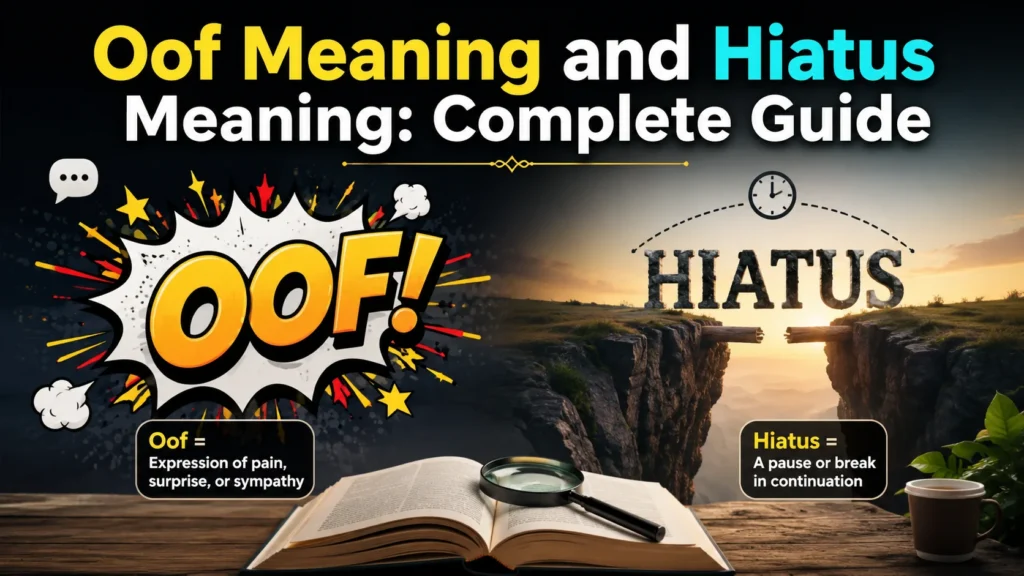

In the fast-paced world of online conversations, slang and expressions often evolve faster than you can keep up. Two terms you’ve probably seen everywhere are “Oof” and “hiatus.” Whether you’re scrolling through memes, reading tweets, or chatting with friends, understanding these expressions helps you stay relevant and avoid awkward miscommunications.
This guide dives deep into the Oof meaning, its origins, real-life examples, alternatives, and how it compares to the term hiatus. You’ll also find tips, tables, and practical advice for using these terms correctly in different contexts.
What Does “Oof” Mean?
At its core, “Oof” is an exclamation. It expresses pain, embarrassment, minor failure, or sympathy. But its simplicity hides a range of nuanced uses.
- Casual Use: Expressing minor disappointment or frustration.
- Humorous Use: Reacting to an awkward moment or meme.
- Empathetic Use: Showing sympathy for someone’s misfortune.
For example:
- “Oof, I forgot my homework at home.”
- “Oof, that meme is brutal but hilarious.”
Origins of “Oof”
The rise of “Oof” is closely tied to gaming culture, especially the platform Roblox. When a character dies or fails in Roblox, a sound effect plays that sounds like “oof.” This sound quickly turned into text shorthand for reacting to failure, minor pain, or awkward situations online.
Over time, the word spread beyond gaming and became a staple of social media communication, appearing in memes, TikTok videos, Twitter posts, and even casual texting.
Tone and Connotation
“Oof” is flexible but context matters:
- Funny or playful: “Oof, that video made me laugh so hard!”
- Sympathetic: “Oof, sorry to hear about your exam results.”
- Sarcastic: “Oof, way to mess up… again.”
It’s important to know your audience. Using “Oof” in professional emails or formal writing can seem immature or confusing.
Examples in Context
Here are some common scenarios where “Oof” fits perfectly:
| Context | Example | Tone |
| Gaming | “Oof, I fell off the map again.” | Casual/Funny |
| Social Media | “Oof, that roast got me good.” | Humorous |
| Texting | “Oof, missed the meeting.” | Sympathetic |
| Meme Culture | “Oof, literally me.” | Playful/Sarcastic |
Best Alternatives to “Oof”
Depending on the tone and context, you can use these substitutes:
- Casual: “Yikes,” “Uh-oh,” “Dang.”
- Sympathetic: “Oh no,” “That sucks,” “Bummer.”
- Meme-style: “F,” “Rip,” “Smh.”
Using alternatives helps keep your language fresh while matching your tone to the situation.
What Does “Hiatus” Mean?
While “Oof” is an exclamation, hiatus is a noun that refers to a temporary break, pause, or gap in activity. People often confuse it with quitting, but a hiatus implies returning after the break.
- Literal Meaning: A pause or interruption.
- Figurative Use: Time off from social media, work, or creative projects.
For example:
- “I’m on a hiatus from Instagram this week.”
- “The TV show went on a short hiatus but returns next season.”
Origins of “Hiatus”
The word “hiatus” comes from Latin, where it means “gap” or “opening.” Historically, it described physical gaps, but modern usage applies to breaks in time, activity, or speech.
It gained popularity in media and entertainment, describing breaks between TV seasons, YouTube uploads, podcasts, or artists’ releases.
Also Read This ; LMR Meaning (Hiatus Meaning): Complete Guide to Understanding
Examples in Context
| Field | Example | Notes |
| Entertainment | “The band is on hiatus after their world tour.” | Temporary break, expected return |
| Social Media | “Taking a hiatus from Twitter.” | Self-imposed break for mental health |
| Work/Professional | “The project is on hiatus until funding arrives.” | Formal, professional context |
| Personal Life | “I took a hiatus from dating.” | Casual, reflective |
Tone and Connotation
Hiatus can signal different things depending on context:
- Positive: A chance to recharge, focus on mental health, or gain perspective.
- Neutral: Simply a factual pause.
- Negative: Could be misinterpreted as uncertainty, inactivity, or lack of interest.
Best Alternatives to “Hiatus”
Here’s a quick guide to similar terms:
| Type | Alternatives | Notes |
| Short-term | Break, Pause, Time off | Casual and conversational |
| Long-term | Sabbatical, Leave of Absence | Professional or formal |
| Digital | AFK (Away From Keyboard), Offline | Common in gaming or messaging |
Comparing “Oof” vs. “Hiatus”
It’s easy to confuse these terms if you’re not careful. Here’s a clear comparison:
| Term | Part of Speech | Meaning | Example | Tone |
| Oof | Exclamation | Minor failure, pain, or embarrassment | “Oof, I lost my keys.” | Casual, humorous |
| Hiatus | Noun | Temporary break or pause | “I’m on hiatus from work.” | Neutral, formal/casual |
Key Difference:
- Oof reacts to an event.
- Hiatus describes a state or planned break.
Tips for Using “Oof” and “Hiatus” Correctly
- Know your audience. Casual friends vs. professional colleagues require different word choices.
- Context matters. “Oof” works for memes and texting, not formal emails.
- Use alternatives when appropriate. “Hiatus” may sound too formal in casual chats.
- Pair with emojis or GIFs. These clarify tone and add humor.
- Avoid overuse. Constant “Oof” or “hiatus” can become repetitive and lose impact.
Common Mistakes & Misunderstandings
- Using “Oof” seriously in professional settings can come off as unprofessional.
- Confusing hiatus with quitting or permanent breaks.
- Misusing alternatives that don’t match tone (e.g., “AFK” in work emails).
- Ignoring platform conventions—some terms work better on social media than in text messages.
Creative Ways to Use These Terms
Both “Oof” and “hiatus” are versatile when used creatively:
- Social Media Captions:
- “Oof, Monday hits again.”
- “On a hiatus, but back soon with new content.”
- Texting Humor:
- Friend drops an embarrassing story → “Oof, savage!”
- Planning a short break → “Hiatus mode activated 😎”
- Meme Culture:
- Combining “Oof” with reaction GIFs.
- Announcing a hiatus with a funny visual metaphor (empty chair, closed laptop).
Case Study: Popular Use of “Oof” Online
Roblox gamers and meme communities popularized “Oof” as an instant reaction. Social media analysis shows:
- On Twitter, “Oof” appears in millions of tweets annually as a shorthand for humorous or embarrassing moments.
- On TikTok, creators use it in captions to indicate minor fails or relatable experiences.
- Influencers often combine “Oof” with memes and GIFs to increase engagement.
This demonstrates how context drives understanding—the same word can be funny, empathetic, or sarcastic depending on use.
Case Study: Hiatus in Entertainment
Hiatuses are common in entertainment, signaling planned breaks rather than abandonment:
- TV Shows: Many series take seasonal hiatuses. Example: Stranger Things goes on hiatus between seasons to allow production time.
- YouTubers: Creators often announce hiatuses to recharge creatively or focus on personal life.
- Musicians: Artists like Adele have taken hiatuses to focus on family, returning with renewed creativity.
Hiatuses can be strategic, benefiting both creators and audiences by building anticipation.
FAQs:
1. What does “Oof” mean in Roblox?
- In Roblox, “Oof” is the death sound of a character. It became a text expression to react to failure, pain, or awkward situations.
2. Is “hiatus” permanent?
- No. A hiatus indicates a temporary pause, unlike quitting or leaving permanently.
3. Can I use “Oof” in professional emails?
- Generally, no. It’s casual and informal, best used in texts or social media.
4. Are there emoji equivalents for “Oof”?
- Yes. 😬 (grimace), 😅 (sweat smile), or 😳 (flushed) can convey similar tones.
5. What’s the best alternative to “hiatus” for casual texting?
- “Break,” “time off,” or “AFK” works well for informal messaging.
Conclusion:
Understanding Oof meaning and hiatus meaning helps you communicate more clearly and naturally in today’s digital world.
- Oof reacts to small failures, awkward moments, or funny situations.
- Hiatus signals a planned break or pause, often in professional, personal, or entertainment contexts.
Knowing the origins, tone, and best alternatives ensures your words match the situation. From memes to social media, these terms are here to stay—if you use them wisely.