
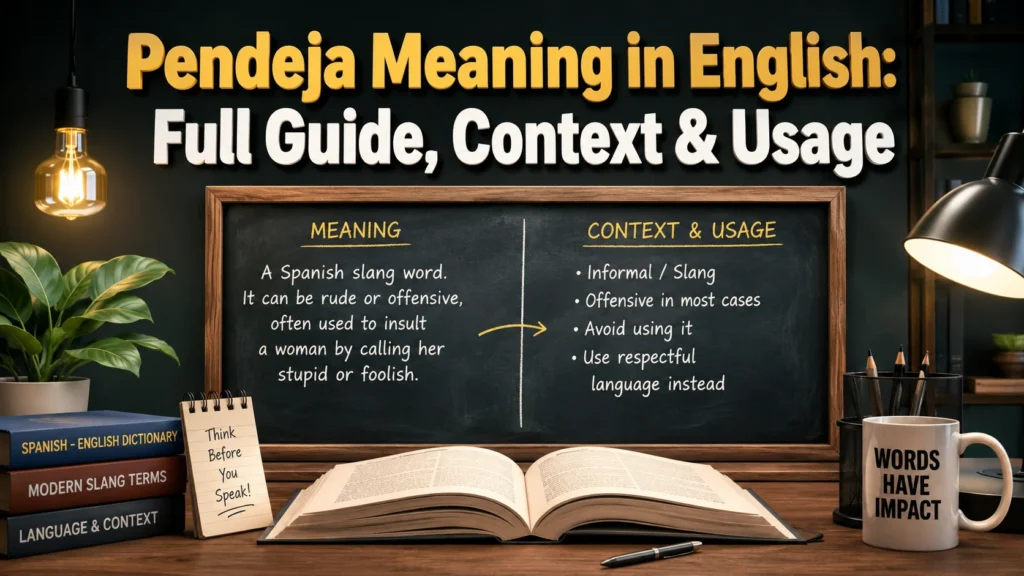

If you’ve ever heard someone say “pendeja” in a movie, on social media, or in a casual conversation, you might have wondered, what does it really mean in English? Is it just a harmless joke, or is it a serious insult? Understanding this word goes beyond translation—it requires exploring culture, tone, and context.
In this guide, you’ll learn the literal meaning, gender distinctions, cultural significance, common expressions, and even how to respond if someone calls you a pendeja. By the end, you’ll not only understand it fully but also avoid common misunderstandings when interacting in Spanish-speaking environments.
Literal Translation of Pendeja
At its core, pendeja is a Spanish word used across Latin America and Spain. The direct English equivalents often include:
- Fool
- Idiot
- Silly
- Naive
- Dumb
It’s important to note the gendered form:
| Spanish | Gender | English Equivalent |
| Pendeja | Female | Fool, silly girl |
| Pendejo | Male | Fool, silly guy |
Example sentences:
- Spanish: “No seas pendeja.”
- English: “Don’t be foolish.”
- Spanish: “Eres una pendeja.”
- English: “You’re an idiot.”
Even though translation gives a rough meaning, it doesn’t capture the emotional weight or tone of the word in conversation. That’s where context matters.
Tone & Context
The tone in which pendeja is said completely changes its meaning. It can range from playful teasing to serious insult.
Playful / Friendly Use
Among friends, family, or romantic partners, pendeja often comes across as light teasing. It can mean “silly” or “clumsy” without any real offense.
Example:
- Spanish: “Eres pendeja, me hiciste reír.”
- English: “You’re silly, you made me laugh.”
Harsh / Insulting Use
In arguments or tense situations, calling someone pendeja becomes an offensive insult. Tone, body language, and relationship matter.
Example:
- Spanish: “¡Qué pendeja eres!”
- English: “What an idiot you are!”
Understanding context is crucial. Non-native speakers often misunderstand the word because they only see the literal translation.
Cultural Significance
The meaning and usage of pendeja can differ depending on the country or region. Here’s a breakdown:
| Country | Usage | Tone / Perception |
| Mexico | Common slang | Mostly playful, less harsh |
| Spain | Slightly stronger | Can be mildly insulting |
| Argentina | Casual, often joking | Usually humorous |
| Other Latin America | Varies by region | Depends on relationship and context |
In Latin American culture, words like pendeja reflect informal speech and local humor. For example, calling someone pendeja in Mexico among friends is often affectionate teasing, whereas in Spain, it might come off more seriously.
Fun fact:
Many Spanish-speaking countries use pendeja in popular music, movies, and social media memes, showing its versatility in everyday life.
Differences Between Pendeja and Pendejo
Gender matters in Spanish insults, and this affects how pendeja and pendejo are used:
- Pendeja: Female
- Pendejo: Male
Despite the gender difference, the tone, meaning, and context are almost identical. What changes is how society perceives the insult: in some cultures, calling a woman pendeja can carry more sting due to social norms, whereas calling a man pendejo might be more accepted in casual banter.
Example:
- Female: “Eres una pendeja, ¿de verdad hiciste eso?” → “You’re such a fool, did you really do that?”
- Male: “Eres un pendejo, ¿cómo no lo viste?” → “You’re such an idiot, how did you miss that?”
Common Expressions & Idioms with Pendeja
Pendeja appears in many everyday phrases. Here are some common ones, with English equivalents:
| Spanish Phrase | Literal Translation | Natural English Equivalent |
| No seas pendeja | Don’t be a fool | Don’t be stupid |
| Qué pendeja eres | What a fool you are | You’re such an idiot |
| Estás pendeja | You are foolish | You’re being dumb |
| Eres una pendeja | You’re a fool | You’re acting silly |
These phrases often appear in movies, songs, and casual conversations, making it important to understand context and tone.
Also Read This: Hakuna Matata Meaning in English: Origins, Translation, and Cultural Impact
Usage in Media & Pop Culture
Pendeja is frequently used in:
- Movies and TV shows: Characters often say it to convey frustration or humor.
- Music lyrics: Artists use it playfully or as a critique of someone’s actions.
- Social media: Memes, captions, and TikToks often rely on pendeja for comedic effect.
Example:
A popular meme might say:
- “Cuando tu amiga se olvida de tu cumpleaños: ¡Eres una pendeja!”
- Translation: “When your friend forgets your birthday: You’re an idiot!”
Subtitles often adapt pendeja to fit tone rather than translate literally, which helps English speakers understand context.
How to Respond if Called Pendeja
If someone calls you pendeja, your reaction depends on tone and relationship:
Friendly / Playful
- Laugh it off or respond jokingly.
- Example: “Sí, soy pendeja y orgullosa de ello.” → “Yes, I’m silly and proud of it.”
Harsh / Offensive
- Stay polite or ignore it to avoid escalating.
- Example: “Ok, entiendo tu punto.” → “Okay, I get your point.”
Quick Tips:
- Don’t assume it’s always negative.
- Look at body language and context first.
- Respond with humor if safe, or calmly if serious.
Summary & Key Takeaways
Here’s what you need to remember about pendeja:
- Literal meaning: fool, idiot, silly, dumb, naive
- Gendered form: pendeja (female), pendejo (male)
- Tone matters: playful teasing vs serious insult
- Cultural nuance: usage varies across Latin America and Spain
- Common expressions: “No seas pendeja,” “Qué pendeja eres,” “Estás pendeja”
Quick example sentence to tie it all together:
- Spanish: “No seas pendeja, estudia para el examen.”
- English: “Don’t be silly, study for the exam.”
Table of Related Spanish Slang Words
| Spanish Word | Meaning in English | Tone / Use |
| Tonta | Silly, dumb | Mild insult or teasing |
| Idiota | Idiot | Stronger insult |
| Boba | Foolish, naive | Playful, gentle |
| Tarada | Crazy, dumb | Can be playful or harsh |
| Loca | Crazy | Mostly playful among friends |
This table helps readers compare pendeja with similar expressions.
FAQs:
Q1: Is pendeja always offensive?
A: No. Tone and context matter. Among friends, it can be playful; in arguments, it’s insulting.
Q2: Can I use pendeja with friends?
A: Yes, if you know them well. It’s often used jokingly, especially in Mexico and other Latin American countries.
Q3: What’s the difference between pendeja and pendejo?
A: Pendeja is female, pendejo is male. Meaning and tone remain similar; perception changes slightly by gender.
Q4: How do you say pendeja in English naturally?
A: Depending on context: fool, idiot, silly, dumb, or naive. Always consider tone.
Q5: Does pendeja appear in pop culture?
A: Yes. Movies, songs, memes, and social media frequently use it for humor or criticism. Subtitles often adapt meaning for English speakers.
Conslusion
Understanding pendeja goes beyond a literal translation. It’s a cultural and contextual word that carries different meanings based on tone, gender, and region. Whether you hear it in a movie, online, or among friends, knowing its nuances ensures you respond appropriately and even enjoy its playful side.
Next time someone calls you pendeja, you’ll know exactly how to interpret it—whether it’s a joke, a playful jab, or an insult.