
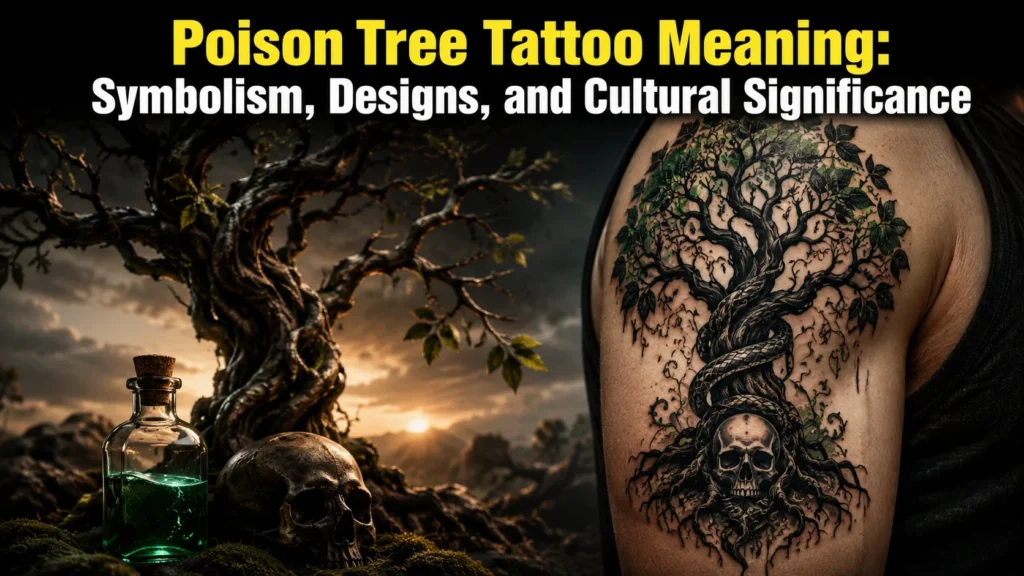

Tattoos have always been more than just body art—they’re personal stories etched into skin, symbols of identity, emotion, and philosophy. Among the many tattoo motifs, the poison tree tattoo stands out for its deep, mysterious symbolism. It evokes emotions ranging from anger and secrecy to transformation and resilience. But what does this tattoo truly mean, and why do people choose it as their permanent mark?
This article dives deep into the poison tree tattoo meaning, exploring its cultural origins, psychological significance, design ideas, and how to choose one that resonates with your personal story
Origins and Cultural Significance of the Poison Tree Tattoo
Understanding the roots of the poison tree symbol helps explain why it has become a popular tattoo motif. The image of a poisonous or forbidden tree recurs throughout mythology, literature, and folklore, making it a symbol loaded with meaning.
Historical References
Poisonous or forbidden trees appear in various cultures:
- Greek Mythology: Trees like the oleander or yew often symbolized death or danger. In some myths, trees held the secrets of life and death, offering both healing and harm.
- Biblical References: The Tree of Knowledge in the Garden of Eden is perhaps the most iconic “forbidden tree,” symbolizing temptation and the consequences of choice.
- William Blake’s Poem, “A Poison Tree”: This 1794 poem explores anger and hidden resentment, showing how suppressed emotions grow like poison inside, ultimately leading to destruction.
Cross-Cultural Meanings
Across cultures, poisonous trees symbolize more than literal danger:
| Culture/Region | Symbolism of Poisonous Trees |
| Europe | Danger, secrecy, temptation, death |
| Asia | Forbidden knowledge, hidden wisdom, resilience |
| Native America | Life cycles, protection, warnings against harmful behavior |
| Middle East | Sin, temptation, moral lessons |
Connection to Tattoos
People often choose the poison tree tattoo to express hidden emotions, resilience, or personal transformation. Unlike generic tattoos, it carries a narrative of secrecy, caution, or introspection—making it a personal and meaningful design.
Symbolism of the Poison Tree Tattoo
The poison tree tattoo meaning is multi-layered. Each element—from roots to branches, fruit to flowers—carries symbolism.
Anger and Hidden Emotions
A poison tree tattoo often represents suppressed anger or emotions. The idea is that unresolved feelings, like poison, can grow inside and fester until they consume the person from within.
Example Designs:
- A tree with twisted, gnarled branches symbolizing internal struggle.
- A dark tree with a single glowing fruit representing hidden anger about a specific event.
Temptation and Danger
Trees associated with poison or forbidden fruits symbolize temptation, risky choices, or moral dilemmas. These tattoos often serve as reminders of life’s dangers or the allure of forbidden desires.
Symbolic Fruits in Designs:
- Apple: Knowledge, sin, temptation.
- Nightshade Berries: Danger, death, mystery.
- Belladonna Flowers: Beauty hiding toxicity.
Transformation and Growth
Interestingly, poison can also symbolize personal growth. The challenges and dangers represented by the tree often teach resilience, self-control, and transformation.
Death and Mortality
Poisonous plants naturally symbolize mortality and the fragility of life. A poison tree tattoo can serve as a personal memento mori—a reminder of life’s impermanence.
Psychological Interpretations of Poison Tree Tattoos
Beyond visual symbolism, poison tree tattoos reflect psychological and emotional depth. They reveal aspects of personality, coping mechanisms, and internal struggles.
- Personality Traits Associated:
- Introspective and mysterious individuals.
- People who value secrecy or self-protection.
- Those embracing their darker emotions rather than hiding them.
- Emotional Coping:
- Tattoos can act as a therapeutic tool, allowing people to externalize anger, grief, or suppressed feelings.
- The tattoo becomes a visual representation of internal balance—acknowledging danger while showing control over it.
Case Study Example:
A client chose a poison tree tattoo after a betrayal. The twisted, dark branches reflected anger and pain, while subtle red fruit symbolized eventual personal growth and learning from the experience.
Also Read This: LMS Meaning Text: Complete Guide Including Hiatus Meaning
Common Poison Tree Tattoo Designs
A poison tree tattoo can take many forms, each carrying slightly different meaning. Understanding these helps you choose a design that matches your personality.
Illustrative Ideas
- Single twisted tree: Represents personal struggle, resilience, or hidden emotions.
- Tree with fruit or flowers: Highlights danger, temptation, or beauty hiding toxicity.
- Abstract trees: Minimalistic or surreal interpretations symbolize internal emotional states.
Placement Ideas
| Placement | Meaning / Design Consideration |
| Forearm | Visible, makes a bold statement |
| Back | Allows large, detailed designs |
| Chest | Close to the heart, emotional depth |
| Shoulder | Symbolizes strength, resilience |
Color Symbolism
- Black: Mystery, danger, hidden emotions
- Red: Anger, temptation, life force
- Green/Dark Green: Growth, resilience, hidden knowledge
- Hints of White or Yellow: Contrast, duality of danger and hop
Variations and Personalized Meanings
Poison tree tattoos can be combined with other elements to amplify meaning:
- Snakes: Danger, temptation, or hidden threats
- Skulls: Mortality, consequences
- Ravens: Mystery, intelligence, death
- Flowers or Birds: Beauty, resilience, hope amidst danger
Personal stories often drive design choices. Someone who overcame betrayal might choose a poison tree with a single glowing fruit symbolizing personal growth. Others might want a tree wrapped with a snake, representing the dangers they’ve faced.
Famous Examples and Pop Culture Influence
The poison tree motif appears frequently in literature, art, and tattoos.
- Literature: William Blake’s “A Poison Tree” directly influences tattoo symbolism.
- Pop Culture: Dark fantasy films and TV shows often depict poisonous or forbidden trees, inspiring tattoo enthusiasts.
- Celebrities: Some tattooed artists and actors incorporate poison tree elements to signify hidden depth, rebellion, or personal transformation.
Things to Consider Before Getting a Poison Tree Tattoo
Getting a poison tree tattoo is a personal decision, and thoughtful planning ensures a meaningful and lasting result.
Checklist Before Choosing a Design:
- Emotional significance: Are you choosing it for personal meaning or aesthetics?
- Style: Realistic, abstract, cartoonish, or minimalistic?
- Placement: Visibility, pain tolerance, and size.
- Artist Selection: Look for tattoo artists skilled in dark, detailed, or symbolic designs.
Pro Tip: Combining elements like fruit, flowers, or animals can make your tattoo unique and personal.
Visual Enhancements
Table of Common Poisonous Tree Symbols:
| Tree / Plant | Symbolic Meaning | Typical Tattoo Use |
| Apple Tree | Temptation, knowledge | Fruit in dark colors, glowing highlights |
| Nightshade | Danger, mystery | Twisted branches or berries |
| Belladonna | Beauty and toxicity | Flowers with subtle red or purple accents |
| Yew Tree | Death, mortality | Dark roots, skeletal branches |
| Thorned Tree | Protection, struggle | Sharp angles, detailed thorns |
List of Popular Poison Tree Tattoo Ideas:
- Dark twisted tree with glowing fruit
- Minimalistic tree with hidden poison berries
- Tree wrapped by a snake with skull roots
- Abstract watercolor poison tree blending dark and light tones
- Tree with falling leaves symbolizing transformation
FAQs:
Q1: What does a poison tree tattoo symbolize emotionally?
A: It often symbolizes hidden anger, suppressed emotions, temptation, or personal growth. Each branch, fruit, or flower carries a personal meaning for the wearer.
Q2: Are poison tree tattoos only dark or gothic in style?
A: Not at all. While many designs are dark, abstract or colorful interpretations exist. Colors and design choices can reflect hope, resilience, or personal transformation.
Q3: Where is the best place to get a poison tree tattoo?
A: Popular placements include forearm, chest, back, or shoulder depending on size, detail, and visibility preference.
Q4: Can the poison tree tattoo be personalized?
A: Absolutely. You can combine the tree with snakes, flowers, birds, or skulls to represent specific emotions, experiences, or personal symbolism.
Q5: How do I choose the right tattoo artist for a poison tree design?
A: Look for artists experienced in dark, symbolic, and detailed designs. Check their portfolio, reviews, and ensure they understand your personal story to capture it in ink.
Conclusion
The poison tree tattoo meaning goes far beyond simple body art. It’s a symbol of anger, hidden emotions, temptation, and transformation. From its cultural roots in mythology and literature to its psychological interpretations, it offers a complex narrative for those who choose it.
A poison tree tattoo isn’t just a design—it’s a story, a warning, and a reflection of personal growth. Before choosing one, reflect on your own experiences and the story you want to tell.
Remember: Tattoos are permanent, but the meaning you carry with them can evolve with your life. Choose a design that truly reflects your journey and resilience.