
“Ditto” is one of those small words that carries a surprisingly rich meaning. You’ll see it in text messages, social media comments, and even casual conversations. At first glance, it seems simple. However, its roots go back centuries, and its use today reflects how people communicate quickly and emotionally.
In the United States, language keeps evolving with technology. Because texting and online chat favor speed, words like “ditto” have found a strong place in daily life. Understanding what it means—and how it’s used—helps you read tone, emotion, and intent more clearly.
So, what does “ditto” really mean in text? Let’s break it down from its origins to its modern use.
Quick Answer
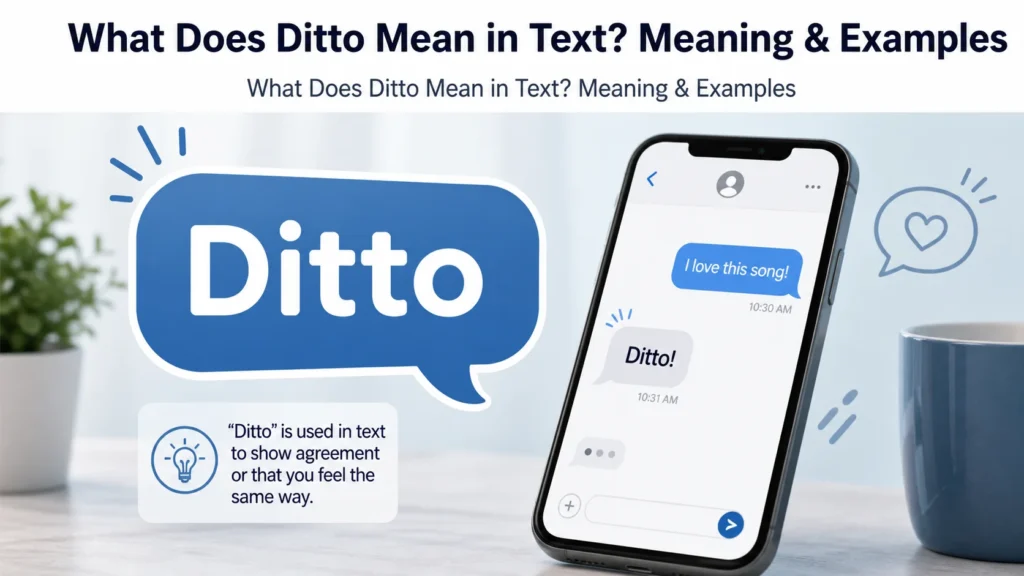
What Does Ditto Mean in Text: Meaning, Usage, and Real-Life Examples — “ditto” means “the same as what was just said.” In the U.S., people use it to agree, repeat a feeling, or avoid typing the same message again. It often signals shared emotion or quick agreement.
TL;DR
• Means “same as above” or “I agree”
• Common in texts, chats, and comments
• Shows shared feelings or opinions quickly
• Originates from Italian “detto” meaning “said”
• Popular in casual and friendly communication
• Can sound warm, lazy, or playful depending on tone
What Does Ditto Mean in Texting?
In modern texting culture, “ditto” is a shortcut. It replaces repeating the same idea or feeling someone else already expressed. Because texting values speed, it’s become a natural fit.
Everyday Texting Meaning
When someone says something, replying “ditto” means you feel the same way. For example, if someone texts, “That movie was amazing,” replying “ditto” shows agreement.
• Saves time instead of repeating full sentences
• Shows agreement without adding new words
• Keeps conversations flowing quickly
• Works best in casual, friendly chats
• Often used between friends, partners, or coworkers
Tone in Messages
Tone matters. “Ditto” can feel warm, neutral, or even slightly dismissive depending on context.
• Warm: “Miss you!” → “Ditto ❤️”
• Neutral: “That test was hard.” → “Ditto”
• Dry: Used alone without emotion can seem blunt
The Origin and History of “Ditto”
Although “ditto” feels modern, it actually has deep historical roots. Its journey into English reflects how language travels and evolves.
Italian Roots
The word comes from the Italian “detto,” meaning “said.” Over time, English speakers adapted it into “ditto.”
Early Written Use
In the 1600s and 1700s, “ditto” appeared in accounting and writing. Instead of repeating items in a list, people wrote “ditto” or used ditto marks (“ ”).
• Used in bookkeeping to repeat entries
• Saved space in handwritten documents
• Became a practical writing tool
• Spread across English-speaking regions
Shift Into Speech
Eventually, “ditto” moved from written records into everyday speech. By the 19th century, people used it in conversation to show agreement.
How “Ditto” Became Popular in the USA
In the United States, “ditto” gained popularity through both practical use and media influence. Over time, it became part of casual American speech.
Cultural Adoption
Americans embraced “ditto” because it fits a direct communication style. It’s short, clear, and efficient.
• Common in workplaces and informal chats
• Used in classrooms and group discussions
• Appears in movies and TV dialogue
• Reinforced by digital messaging habits
Media Influence
Film and television helped shape its emotional tone. For example, in romantic or emotional scenes, “ditto” can carry deep meaning without many words.
Common Uses of Ditto in Real Life
Today, “ditto” appears in many everyday situations. Its meaning depends on context, tone, and relationship between speakers.
Typical Situations
• Agreeing with someone’s opinion
• Sharing the same feeling or mood
• Responding quickly in group chats
• Avoiding repetition in lists or notes
• Showing subtle emotional connection
Real-Life Examples
• “I’m so tired today.” → “Ditto.”
• “That was the best concert ever!” → “Ditto!”
• “Good luck tomorrow!” → “Ditto, you too!”
Emotional and Psychological Meaning of “Ditto”
Even though it’s a simple word, “ditto” carries emotional weight. It reflects connection and shared experience.
Emotional Signals
When people use “ditto,” they’re often signaling alignment. It creates a sense of “we feel the same.”
• Builds connection through shared feelings
• Shows empathy without long explanations
• Creates a sense of unity in conversations
• Can feel intimate in close relationships
Psychological Impact
Because it’s brief, “ditto” relies on context. This makes it powerful but also open to interpretation.
• Can feel supportive when paired with emotion
• May seem lazy if overused
• Depends heavily on relationship closeness
Modern Usage in Social Media and Online Culture
In today’s digital world, “ditto” fits perfectly. Social media encourages short, fast responses.
Where You’ll See It
• Comment sections under posts
• Group chats and messaging apps
• Replies on platforms like X or Instagram
• Online forums and communities
Why It Works Online
• Quick response without typing full sentences
• Matches fast-paced communication style
• Easily understood across age groups
• Feels casual and conversational
Ditto in Different Contexts (Table Guide)
Below is how “ditto” changes meaning based on context in the U.S.
| Context | Meaning in the USA | Common Associations | Notes |
| Texting | Same feeling or opinion | Agreement, simplicity | Most common modern use |
| Workplace | Repeating a point | Efficiency, clarity | Used in meetings or notes |
| Relationships | Shared emotion | Warmth, connection | Often feels personal |
| Social Media | Quick agreement | Casual tone | Seen in comments and replies |
| Lists/Documents | Same as above entry | Organization | Traditional written usage |
Cross-Cultural Meanings and Interpretations
While “ditto” is widely used in English, its meaning stays fairly consistent across cultures. However, usage may vary slightly.
Global Understanding
Most English-speaking cultures use “ditto” similarly. It still means “the same” or “I agree.”
Cultural Differences
• Some cultures prefer more detailed responses
• Others may see it as too informal
• Tone may be interpreted differently across regions
Misunderstandings and Common Mistakes
Although simple, “ditto” can sometimes confuse people.
Also Read This: What Does ISK Mean in Text? (2026 Guide)
Common Misuses
• Using it without clear context
• Replying “ditto” when a different response is expected
• Overusing it in serious conversations
Potential Confusion
Because it depends on previous statements, “ditto” can lose meaning if used alone or out of context.
• Can seem unclear in long conversations
• May feel dismissive if not paired with tone
• Not ideal for formal communication
How the Meaning of “Ditto” Has Changed Over Time
Language evolves, and “ditto” is no exception. Its meaning stayed stable, but its usage shifted.
Then vs Now
In the past, “ditto” was mostly written. Today, it’s spoken and typed daily.
• Then: Used in bookkeeping and lists
• Now: Used in texting and casual speech
• Then: Formal repetition tool
• Now: Emotional and conversational shortcut
Modern Shift
Today, “ditto” carries more emotional meaning than before. It’s not just repetition—it’s connection.
When to Use (and Not Use) “Ditto”
Knowing when to use “ditto” helps avoid confusion.
Good Situations
• Casual conversations with friends
• Quick replies in chats
• Expressing shared feelings
Situations to Avoid
• Formal emails or professional writing
• Complex discussions needing clarity
• When adding new information is necessary
FAQs
What does “ditto” mean in texting?
It means “same as what you said.” People use it to agree or share the same feeling.
Is “ditto” rude or polite?
It depends on tone. It can feel friendly, but alone it may seem short or distant.
Can “ditto” be used in formal writing?
Usually no. It’s better suited for casual or informal communication.
Why do people say “ditto” instead of repeating?
Because it saves time and keeps conversations simple and quick.
Does “ditto” mean copy exactly?
Yes, it means repeating the same idea or statement exactly.
Is “ditto” still popular today?
Yes, especially in texting and social media, where short replies are common.
Conclusion
“Ditto” may be a small word, but it carries a big role in modern communication. It connects people through shared thoughts, emotions, and quick responses. From its Italian roots to its place in American texting culture, it has evolved into a powerful shortcut for agreement and understanding.
In today’s fast-paced world, What Does Ditto Mean in Text: Meaning, Usage, and Real-Life Examples isn’t just about repetition—it’s about connection. When used thoughtfully, “ditto” can make conversations feel smoother, more natural, and even more human.