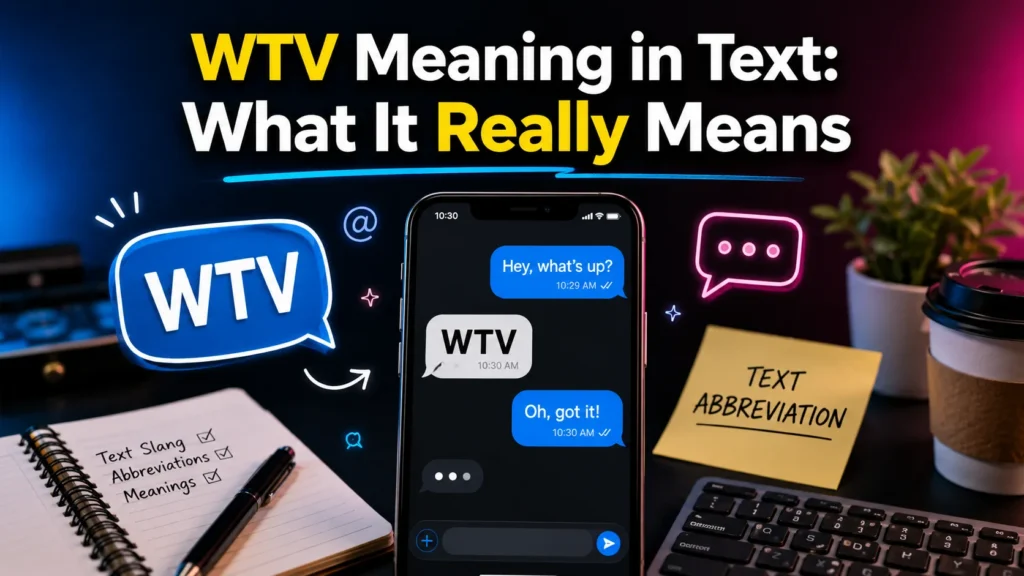

Have you ever received a text that simply says “WTV” and wondered whether the person meant whatever, I don’t care, or something a little more sarcastic? You’re not alone. Texting abbreviations can pack a surprising amount of attitude into just three letters.
In most casual conversations, WTV means “whatever.” However, that simple definition doesn’t tell the whole story. Depending on the conversation, WTV can express flexibility, indifference, resignation, annoyance, or dismissal. The words around it, punctuation, emojis, and relationship between the people texting can completely change how the message feels.
This guide breaks down the WTV meaning in text, explains how people use it in real conversations, and shows you how to respond without accidentally making things awkward.
Quick Answer
WTV means “whatever” in text messages and online conversations. It’s an informal abbreviation commonly used in texts, social media messages, chats, and comments.
Depending on context, WTV can mean:
- “Whatever” — the direct shortened form.
- “I don’t mind” — when someone has no preference.
- “Anything is fine” — when they’re happy with any option.
- “I don’t care” — when they feel indifferent.
- “Forget it” or “I’m done discussing this” — in a tense conversation.
- “Fine, whatever” — when someone sounds annoyed or dismissive.
For example:
“What do you want for dinner?”
“WTV, you pick.”
Here, WTV probably means “Whatever you want is fine.”
But consider this exchange:
“You never listen to me.”
“WTV.”
That version can sound much colder. It may communicate “Whatever. I’m done arguing.”
The abbreviation itself doesn’t determine the emotion. Context does.
Comparison Overview
The easiest way to understand WTV is to compare its possible meanings and tones.
| WTV usage | What it can mean | Typical tone | Example |
| Flexible choice | Anything is fine | Neutral | “WTV works for me.” |
| Indifference | I don’t care | Casual | “WTV, you decide.” |
| Dismissal | Whatever / forget it | Cold | “WTV.” |
| Resignation | Fine, whatever | Annoyed | “WTV, let’s just go.” |
| Casual agreement | I’m okay with it | Relaxed | “WTV you want.” |
| Argument-ending response | I’m done talking | Irritated | “WTV. I’m over it.” |
The key point: WTV isn’t automatically rude. A message such as “WTV works for me 😂” feels very different from “WTV.”
Your interpretation should come from the whole conversation, not those three letters alone.
Main Differences Between WTV Meanings
Although WTV usually stands for “whatever,” the practical meaning can shift depending on what the sender wants to communicate.
WTV Meaning: “Whatever”
This is the most direct interpretation. The sender simply replaces the full word whatever with its texting abbreviation.
For example:
“You can choose wtv you want.”
Here, WTV functions almost exactly like the ordinary word whatever.
It’s quick and informal. There’s no need to attach a negative emotion to it.
WTV Meaning: “I Don’t Care”
Sometimes WTV communicates indifference.
Imagine someone asks:
“Should we watch a comedy or a horror movie?”
You reply:
“WTV.”
In that context, you may mean “I don’t really care which one.”
That doesn’t necessarily mean you’re annoyed. You might simply have no preference.
WTV Meaning: “Anything Is Fine”
WTV can also show flexibility.
For example:
“Where should we eat?”
“WTV. I’m good with anything.”
Here, the sender isn’t dismissing the question. They’re giving the other person freedom to choose.
A more natural interpretation would be:
“Whatever you want is fine with me.”
WTV Meaning: “I’m Done With This”
Things change when WTV appears during an argument.
For example:
“I’ve explained this three times.”
“WTV.”
Now the abbreviation may signal frustration, resignation, or a desire to end the conversation.
This is why translating WTV mechanically as whatever doesn’t always capture its real meaning.
What Does WTV Stand for in Texting?
WTV stands for “whatever.”
It’s generally treated as an informal texting abbreviation rather than a formal acronym. You may see it written as WTV, wtv, or Wtv. The capitalization usually doesn’t change its basic meaning.
YourDictionary describes WTV as a shortened version of “whatever” and notes its use in social media and texting. (YourDictionary) Slang.net similarly defines wtv as an abbreviation for “whatever” used in messages and online communication. (Slang)
Why Do People Use WTV?
The reason is simple: speed and convenience.
Texting encourages people to compress familiar phrases. Instead of typing:
“Whatever you want is fine with me.”
Someone might write:
“Wtv u want is fine.”
The abbreviation saves keystrokes while keeping the general meaning intact.
Digital communication has created countless examples of this kind of shorthand. WTV fits naturally into that pattern.
How WTV Changes Meaning Based on Context
Context acts like the missing facial expression in a text conversation.
When you speak face-to-face, your voice, expression, gestures, and timing help explain what you mean. Text removes most of those clues. As a result, a short message like “WTV” can become surprisingly ambiguous.
The Surrounding Words Matter
Compare these:
“WTV works for me.”
and:
“WTV.”
The first message explains itself. The sender is probably saying they’re flexible.
The second message gives you almost nothing to work with. Depending on the previous conversation, it could sound indifferent or irritated.
Punctuation Matters Too
Compare:
- “wtv 😂”
- “WTV!”
- “WTV.”
- “WTV lol”
- “whatever…”
Punctuation and additional text can influence how you perceive the message.
A period after a one-word response can sometimes make the message feel more final or serious. That doesn’t prove the sender is angry. It simply changes the possible reading.
Emojis Can Soften WTV
An emoji can add emotional information that the abbreviation lacks.
For example:
“Wtv 😂”
sounds much more playful than:
“WTV.”
Likewise:
“Wtv, I’m down 😭”
may communicate a joking or relaxed attitude rather than genuine annoyance.
WTV Meaning in Different Conversations
WTV Between Friends
Close friends often use WTV casually because they already understand each other’s communication style.
Friend 1: “Blue shirt or black shirt?”
Friend 2: “Wtv, both look good.”
Here, WTV simply means “either is fine.”
Friends also use it when they don’t want to spend time debating minor decisions.
“Pizza or tacos?”
“Wtv 😂”
There’s little emotional weight behind the message.
WTV in Romantic Conversations
Romantic conversations require more care because short responses can easily be misread.
Suppose someone asks:
“Where do you want to go tonight?”
A response such as:
“Wtv.”
might mean:
“I don’t care. You choose.”
But the recipient could interpret it as:
“I don’t care about spending time with you.”
That’s a major difference.
If you want to sound warm, add a few words:
“Wtv you want, babe. I’m happy either way ❤️”
That removes much of the ambiguity.
WTV in Group Chats
Group chats are another common place to see WTV.
For example:
Alex: “Movie at 7 or 8?”
Sam: “WTV.”
Jordan: “Let’s do 8.”
Alex: “Works.”
In this case, WTV probably means Sam doesn’t have a strong preference.
WTV During an Argument
This is where the abbreviation becomes trickier.
Person A: “You could’ve told me earlier.”
Person B: “I already explained why.”
Person A: “Whatever.”
Person B: “WTV.”
The second person may be signaling that they don’t want to continue the argument.
Here, WTV functions less like “either option is fine” and more like “I’m done with this conversation.”
Real-Life WTV Text Examples
Understanding actual examples makes the difference much clearer.
Example 1: Choosing Food
A: “What should we order?”
B: “WTV, I’m hungry.”
Meaning: B doesn’t have a preference.
Tone: Casual.
Example 2: Choosing a Movie
A: “Comedy or action?”
B: “Wtv you want.”
Meaning: A can choose.
Tone: Flexible and neutral.
Example 3: Showing Indifference
A: “Do you want the blue one?”
B: “WTV.”
Meaning: B doesn’t particularly care.
Tone: Potentially indifferent.
Example 4: During an Argument
A: “You never take my advice.”
B: “WTV.”
Meaning: B may be dismissing the complaint or ending the discussion.
Tone: Potentially irritated.
Example 5: Playful Use
A: “You always steal my fries.”
B: “WTV 😂 they taste better from your plate.”
Meaning: Here WTV has a playful, teasing quality.
Tone: Humorous.
Example 6: Flexible Planning
A: “Do you want to meet Friday or Saturday?”
B: “Wtv works for me.”
Meaning: Either day is acceptable.
Tone: Neutral and cooperative.
How to Tell What Someone Means by WTV
When you’re unsure about a WTV message, don’t immediately assume the sender is being rude.
Instead, examine several clues.
1. Look at the Previous Message
The conversation leading up to WTV often reveals its meaning.
If someone asks you to choose between two restaurants, WTV probably indicates flexibility.
If you’re arguing about something personal, WTV may signal frustration.
2. Check for Extra Words
Compare:
- “WTV.”
- “WTV you want.”
- “WTV works for me.”
- “WTV 😂.”
- “Fine, WTV.”
These aren’t emotionally identical.
3. Consider Your Relationship
A close friend can send:
“wtv lol”
without causing concern.
Someone you barely know might use the same phrase in a way that feels much colder.
Communication history matters.
4. Look at the Tone of the Conversation
If the conversation has been lighthearted, WTV is more likely to be casual.
If the discussion has become tense, the same abbreviation may carry more emotional weight.
5. Don’t Overanalyze One Message
One short response isn’t enough to diagnose someone’s attitude.
People sometimes text while they’re busy, tired, distracted, or simply in a hurry.
Context beats guesswork.
Is WTV Rude?
WTV isn’t inherently rude.
Its tone ranges from perfectly neutral to noticeably dismissive.
The safest way to understand it is to treat WTV as tone-sensitive slang.
When WTV May Sound Rude
It can come across as dismissive when:
- Someone is discussing a serious issue.
- The sender replies with only “WTV.”
- The conversation already contains tension.
- The sender repeatedly gives short answers.
- The recipient expects empathy or a thoughtful response.
For example:
“I’ve been upset about this all day.”
“WTV.”
That response would likely feel insensitive.
When WTV Usually Isn’t Rude
WTV is generally harmless when:
- Friends are making casual plans.
- Someone doesn’t have a preference.
- You’re discussing trivial choices.
- The conversation is clearly playful.
- Extra words explain the intended meaning.
For example:
“Wtv works for me. You pick 😂”
That sounds relaxed rather than hostile.
When Should You Use WTV?
WTV works best in informal communication.
Good Places to Use WTV
You can generally use it in:
- Text messages with friends
- Casual group chats
- Social media DMs
- Informal online conversations
- Gaming chats
- Casual comments
- Conversations where everyone understands the shorthand
Where You Should Avoid WTV
Avoid it in situations that require professional or polished communication.
Examples include:
- Job applications
- Cover letters
- Business emails
- Workplace reports
- Academic assignments
- Customer-service complaints
- Professional networking
- Formal requests
Instead of:
“WTV works.”
write:
“Either option works for me.”
That sounds clearer and more professional.
Also Read This: What Does GMFU Mean in Text? Meaning, Uses, Examples, and Modern Slang Guide
WTV vs. Similar Texting Abbreviations
WTV overlaps with several other texting expressions, but they aren’t identical.
| Abbreviation | Meaning | Main Difference |
| WTV | Whatever | Can show flexibility or indifference |
| IDC | I don’t care | More directly expresses lack of concern |
| IDK | I don’t know | Shows uncertainty rather than indifference |
| NVM | Never mind | Usually drops or withdraws a topic |
| TBH | To be honest | Introduces a candid statement |
| IMO | In my opinion | Introduces a personal viewpoint |
| IKR | I know, right? | Shows agreement |
WTV vs. IDC
These two can look similar, but IDC is usually more direct.
“WTV, you choose.”
This can mean the sender has no preference.
“IDC.”
That more clearly communicates “I don’t care.”
WTV vs. IDK
These expressions answer different questions.
IDK means the sender doesn’t know.
WTV means the sender doesn’t particularly care which option gets chosen.
Compare:
“What should we eat?”
“IDK.”
The person has no answer.
“What should we eat?”
“WTV.”
The person is saying they don’t have a preference.
WTV vs. NVM
NVM means “never mind.”
It’s often used when someone withdraws a question or decides not to continue a topic.
“Can you help me with this?”
“Actually, nvm.”
WTV doesn’t necessarily end the subject. It can simply express indifference.
WTV vs. “Whatever”: What’s the Difference?
The basic meaning is the same.
WTV is simply a shortened texting form of “whatever.”
YourDictionary notes that WTV is a shortened version of whatever and connects it with the informal form whatev. (YourDictionary)
However, the shorter version can sometimes feel more abrupt because it removes additional words.
Compare:
“Whatever you want is fine with me.”
with:
“WTV.”
The first sentence gives the recipient useful information.
The second leaves the emotional interpretation wide open.
That’s why “WTV” can feel colder than “whatever” even when the intended meaning is identical.
How to Reply to WTV
Your best response depends on what the sender appears to mean.
If WTV Means “Anything Is Fine”
Keep your reply simple:
- “Cool, let’s go with this one.”
- “Sounds good.”
- “Perfect.”
- “Okay, we’ll do that.”
- “Great, I’ll choose.”
Example:
Them: “Wtv works for me.”
You: “Cool. Let’s meet at 7.”
No need to make the conversation complicated.
If WTV Seems Dismissive
If the message feels cold, don’t immediately start an argument.
Try:
“Are you okay?”
or:
“Did you mean either option is fine?”
These responses give the other person a chance to clarify.
If You’re Completely Unsure
Ask directly.
Useful replies include:
- “Do you mean you don’t mind?”
- “Are you saying either one works?”
- “Everything okay?”
- “Just checking what you mean by WTV.”
A short clarification can prevent a much longer misunderstanding.
If WTV Appears During an Argument
Avoid matching the attitude.
Instead of replying with another dismissive abbreviation, consider:
“Let’s talk about it when we’re both calmer.”
Sometimes the best response isn’t clever. It’s clear.
Common Mistakes When Using WTV
Using WTV in Professional Messages
A recruiter probably doesn’t want to receive:
“WTV works.”
Use:
“Either option works for me.”
Professional communication rewards clarity.
Assuming WTV Always Means “I Don’t Care”
That’s too narrow.
WTV can mean “whatever you prefer” without communicating hostility.
Using WTV During Sensitive Conversations
If someone is talking about grief, relationships, conflict, or another serious subject, avoid relying on a vague abbreviation.
A few extra words can make a huge difference.
Sending “WTV.” When You Mean “Either Is Fine”
If you’re trying to be friendly, say what you mean:
“Either one works for me!”
That removes the ambiguity.
Assuming Someone Is Angry
Don’t build an entire story around three letters.
Consider the sender’s usual texting habits, the previous messages, and the situation before deciding what they meant.
WTV on Snapchat, TikTok, Instagram, and Other Platforms
The meaning of WTV generally stays the same across platforms.
You may encounter it in:
- Snapchat
- Instagram DMs
- TikTok comments
- Facebook Messenger
- Discord
- Group chats
- Traditional SMS
- Other online messaging platforms
YourDictionary specifically identifies WTV as an abbreviation used on social media, including Snapchat, as well as in texting. (YourDictionary) Slang.net also lists messaging, social media, online chat, and text messaging among its common contexts. (Slang)
The platform doesn’t usually change the definition. The surrounding conversation changes the tone.
Is WTV Still Used in 2026?
Yes. WTV continues to appear in casual online communication in 2026.
Recent slang references continue to define WTV as “whatever” and describe its use in texting and social media. (techyzeno.com)
Community discussions also show that “wtv” remains a recognizable shorthand for “whatever,” although individual texting habits vary. (Reddit)
That’s an important distinction. Not everyone uses every abbreviation. Some people prefer writing the complete word, while others use shorthand constantly.
So if someone doesn’t recognize WTV immediately, that doesn’t necessarily mean the abbreviation is obsolete. Texting vocabulary varies across age groups, communities, regions, and personal habits.
Case Study: Why Context Changes the Meaning
Consider one abbreviation used in three different conversations.
Scenario A: Restaurant Choice
You: “Thai or Mexican?”
Friend: “WTV.”
Likely meaning: Either restaurant is fine.
Tone: Neutral.
Scenario B: Choosing a Movie
You: “Do you want the new thriller or the comedy?”
Friend: “WTV 😂.”
Likely meaning: The friend doesn’t care which movie you choose.
Tone: Relaxed or playful.
Scenario C: Relationship Argument
You: “I feel like you haven’t been listening.”
Partner: “WTV.”
Likely meaning: The person may be dismissing the concern or refusing to continue the argument.
Tone: Potentially irritated.
The Lesson
The letters didn’t change.
The context did.
That’s the central idea behind understanding WTV.
WTV Meaning: Quick Reference Guide
| Question | Answer |
| What does WTV mean in text? | Whatever |
| Is WTV slang? | Yes, it’s informal texting/internet shorthand |
| Is WTV the same as whatever? | Usually, yes |
| Can WTV mean “I don’t care”? | Yes, depending on context |
| Can WTV mean “anything is fine”? | Yes |
| Is WTV always rude? | No |
| Can WTV sound dismissive? | Yes |
| Is WTV appropriate for formal emails? | Generally no |
| Can WTV appear on social media? | Yes |
| What does lowercase “wtv” mean? | Usually the same thing |
| How should you reply? | Match the context and clarify if necessary |
FAQs
What does WTV mean in text?
WTV usually means “whatever.” People use it as an informal abbreviation in texts, chats, social media messages, and other casual digital conversations.
Depending on context, it can communicate flexibility, indifference, resignation, or dismissal.
Does WTV mean “whatever”?
Yes. “Whatever” is the standard meaning of WTV in texting.
For example:
“WTV you want.”
means:
“Whatever you want.”
Is WTV rude?
Not necessarily. WTV can sound perfectly casual when someone is saying they don’t have a preference.
However, a standalone “WTV.” during an argument can sound dismissive or irritated.
How do you respond to WTV?
First, figure out what the sender probably means.
If they’re saying either option is fine, you can simply choose one:
“Cool, let’s do pizza.”
If the response seems dismissive, ask:
“Everything okay?”
If you’re genuinely confused, clarify:
“Do you mean either one works?”
What does WTV mean from a girl or guy?
The meaning doesn’t fundamentally change based on whether the sender is a girl or a guy. WTV means “whatever” regardless of the sender’s gender.
The surrounding conversation, relationship, punctuation, and tone provide much better clues.
Conclusion:
The WTV meaning in text is usually “whatever,” but that simple definition has several shades of meaning. Someone might use it to say “I don’t mind,” “anything works,” “I don’t care,” or “I’m done discussing this.”
That’s why context matters so much.
If someone sends “WTV works for me,” they’re probably being flexible. If they send “WTV 😂,” the message may be playful. But if they respond with only “WTV.” after a heated exchange, the abbreviation may carry a much sharper edge.
The safest approach is straightforward: read the whole conversation, consider the relationship, and pay attention to the words around WTV. When clarity matters, don’t hesitate to ask what the person means.
In casual texting, WTV is short, convenient, and widely understood. In serious or professional situations, however, a few extra words can save you from a needless misunderstanding.