
Yaoi has become a global phenomenon, captivating fans of manga and anime across cultures. But what exactly is yaoi, and why has it gained such a passionate following? Whether you’re a newcomer curious about the genre or someone who wants a deeper understanding of its history, themes, and cultural impact, this guide covers everything you need to know about yaoi meaning.
What Is Yaoi?
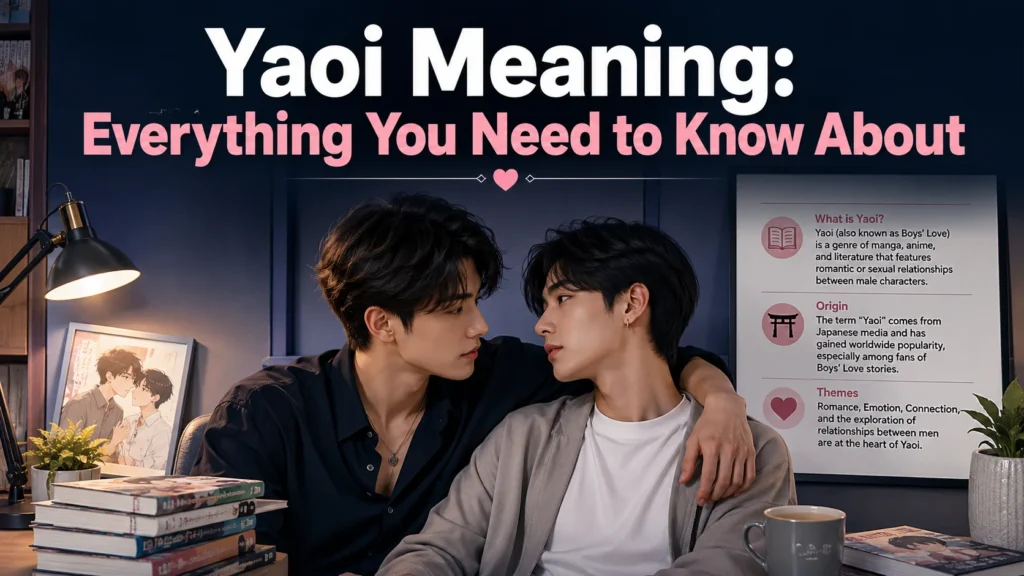
Yaoi is a genre of Japanese manga and anime that focuses on romantic or sexual relationships between male characters. Unlike traditional romance stories, yaoi is often written with female audiences in mind, exploring complex emotional dynamics, dramatic storylines, and sometimes explicit sexual content.
The term originates from Japanese slang. Literally, it stood for “yama nashi, ochi nashi, imi nashi”, which translates to “no climax, no point, no meaning”. Initially, this was a humorous jab at early fan-made stories that prioritized character relationships over plot structure. Today, however, yaoi broadly refers to male-male romance stories, regardless of narrative style.
Yaoi vs. Shōnen-ai
A common point of confusion is the difference between yaoi and shōnen-ai:
| Feature | Yaoi | Shōnen-ai |
| Content | Often includes sexual scenes | Focuses on emotional or romantic connection |
| Target Audience | Usually women | Also appeals to women, often younger readers |
| Story Style | Dramatic, sometimes explicit | Gentle, emotional, romantic |
| Popularity | Mainstream in manga and anime fandom | Niche but influential in early BL culture |
While both genres center around male-male relationships, the focus on physical intimacy is what sets yaoi apart from shōnen-ai.
History of Yaoi
The history of yaoi is as fascinating as the genre itself. It grew out of Japan’s manga culture in the 1970s, primarily from the work of female manga artists, also known as fujoshi (literally “rotten girls”). These artists created stories that explored male romance in a society where direct depiction of LGBTQ+ relationships was limited.
Early Beginnings
- 1970s: Female authors started experimenting with romantic relationships between men.
- 1980s: Doujinshi culture (fan-made manga) expanded the genre, allowing creators to explore themes outside mainstream manga.
- 1990s: Yaoi gained international attention as translated fan works spread online.
International Popularity
By the 2000s, yaoi had crossed cultural boundaries. English translations, online fan communities, and conventions fueled global interest. Titles like Junjou Romantica and Gravitation became worldwide hits, making yaoi a recognized genre beyond Japan.
Case Study:
“Junjou Romantica”, first published in 2002, became a cornerstone of modern yaoi fandom. Its blend of romance, drama, and comedic elements influenced many later works. It also showed that yaoi could be serialized successfully for a broad audience.
Yaoi vs. Related Genres
Understanding yaoi requires knowing its context within the broader Boys’ Love (BL) category. BL refers to all media depicting male-male relationships. Yaoi is a subgenre under this umbrella.
| Genre | Description | Target Audience | Example Titles |
| Yaoi | Male-male romance, often sexual | Women, adult | Sekaiichi Hatsukoi, Junjou Romantica |
| Shōnen-ai | Male-male romance, emotional focus | Women, teens | Kaze to Ki no Uta, Zetsuai 1989 |
| Bara | Gay manga written by men for men | Male LGBTQ+ | Love Pistols, Gengoroh Tagame works |
Unlike bara, which focuses on realistic male-male relationships for a gay male audience, yaoi is mostly fantasy-driven, emphasizing romance, tension, and sometimes exaggerated character archetypes.
Also Read This : AWOL Meaning and Hiatus Explained: Everything You Need to Know
Common Tropes and Themes in Yaoi
Yaoi has some recurrent themes and tropes that fans recognize instantly. Understanding these can help you better appreciate the genre’s storytelling.
Character Archetypes
- Seme: The dominant, confident partner, often taller or older.
- Uke: The submissive, emotionally expressive partner, often younger or smaller.
- These archetypes are central to yaoi storytelling and appear across many titles.
Storylines
- Workplace romances
- School life dramas
- Childhood friends reconnecting
- Forbidden love or secret relationships
Themes
- Love overcoming social barriers
- Emotional growth through relationships
- Tension between desire and societal expectations
These tropes may feel formulaic at first, but they allow authors to explore complex emotions and dramatic conflict, which is the essence of yaoi storytelling.
Yaoi in Media
Yaoi isn’t just a genre confined to manga—it spans multiple media forms.
Manga
Manga remains the core medium for yaoi, with serialized works appearing in magazines like Be × Boy and Chara.
Anime Adaptations
Popular yaoi manga often get anime adaptations. Examples include:
- Junjou Romantica (2008)
- Sekaiichi Hatsukoi (2011)
- Love Stage!! (2014)
Anime brings visual emotion and voice acting, enhancing the romantic and dramatic tension.
Light Novels and Games
Yaoi also appears in light novels and dating simulation games, often targeting female audiences seeking interactive storytelling.
Cultural Impact and Controversies
Yaoi has a significant cultural footprint, but it isn’t without debate.
Global Influence
- Fan conventions celebrate yaoi and BL content worldwide.
- Cosplay, fan art, and fan fiction communities flourish online.
Criticism
Some critics argue that yaoi:
- Oversexualizes characters, especially younger ones.
- Portrays unrealistic relationships.
- Reflects fantasies of female authors rather than authentic LGBTQ+ experiences.
Academic Perspective
Scholars note that yaoi offers insights into gender, sexuality, and fantasy in Japanese culture. Despite criticisms, it has sparked conversations about desire, identity, and storytelling norms.
Yaoi Terminology You Should Know
Familiarizing yourself with common terms makes it easier to navigate the genre:
- Seme & Uke – Dominant and submissive partners.
- Fujoshi – Female fans of male-male romance.
- Doujinshi – Fan-created manga.
- BL/Boys’ Love – Umbrella term for male-male romance.
- Shōnen-ai – Emotional, romantic focus.
How to Read and Enjoy Yaoi
If you’re new to yaoi, here’s how to start:
For Beginners
- Begin with mild romance titles before exploring explicit content.
- Check age ratings and content warnings.
Online Platforms
- Manga apps: Crunchyroll, Mangamo, ComiXology
- Fan translations: Scanlation groups (ensure legality)
Dos and Don’ts
- Do respect the fandom and creators.
- Don’t assume all yaoi reflects real LGBTQ+ experiences.
- Avoid spoilers when discussing ongoing series.
Common Misconceptions About Yaoi
- It’s not just porn: While sexual content exists, stories often emphasize romance and drama.
- It’s fantasy: Many relationships are exaggerated for storytelling purposes.
- It’s not written by gay men: Most yaoi is created by women for female audiences.
- It’s culturally niche: Yaoi has a significant global audience today.
Case Study: The Global Success of Yaoi
Sekaiichi Hatsukoi became an international sensation by blending romance, comedy, and workplace drama. Its success illustrates how yaoi can resonate across cultures, despite language and cultural barriers.
Visual Comparison Table: Yaoi, Shōnen-ai, and Bara
| Aspect | Yaoi | Shōnen-ai | Bara |
| Content | Sexual + romantic | Romantic, emotional | Realistic gay sex & romance |
| Target Audience | Women | Women, teens | Gay men |
| Art Style | Stylized, idealized | Soft, delicate | Muscular, realistic |
| Story Themes | Drama, taboo, fantasy | Emotional growth | Real-life LGBTQ+ experiences |
FAQs:
1: Is yaoi appropriate for teenagers?
Some titles are teen-friendly, but many contain explicit content. Always check age ratings.
2: Why do most yaoi authors and fans tend to be female?
Yaoi often explores male-male relationships as a fantasy detached from real-life gender expectations, appealing to female creators and readers.
3: Can yaoi be considered LGBTQ+ representation?
Partially. Yaoi explores male-male relationships, but it is often fantasy-oriented and doesn’t always reflect authentic experiences.
4: How is yaoi different from gay pornography?
Yaoi emphasizes romance, emotional tension, and storylines, not just sexual content. Pornography focuses purely on sexual acts.
5: Where can I legally read yaoi manga?
Platforms like Crunchyroll Manga, ComiXology, and official publisher websites offer legal options. Supporting creators ensures more content production.
Conclusion:
Yaoi is more than just a genre—it’s a cultural phenomenon, blending romance, drama, and fantasy into a unique form of storytelling. Its history, themes, and global influence make it a fascinating subject for fans, scholars, and casual readers alike. By understanding yaoi meaning, exploring its stories responsibly, and recognizing its cultural context, you can fully appreciate why this genre continues to captivate audiences around the world.
Whether you’re reading a classic like Junjou Romantica, exploring doujinshi, or diving into a new anime adaptation, yaoi offers emotional depth, compelling characters, and a world of romantic fantasy that’s hard to resist.