
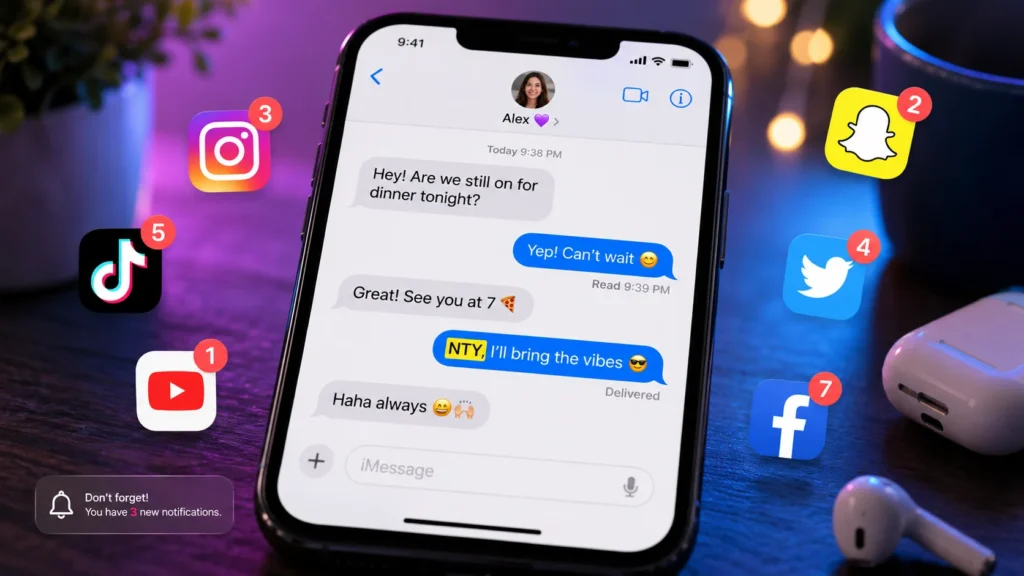

People often see “NTY” in texts, dating apps, social media comments, or gaming chats and wonder what it means. The phrase looks simple, yet its tone can change depending on context, relationship, and platform. In modern American digital culture, abbreviations like NTY help people respond quickly while still sounding polite.
“What Does NTY Mean in Text?” has become a common question because texting language changes fast. Many online shortcuts come from internet culture, mobile messaging habits, and social media trends. Some fade away quickly, while others become part of everyday communication.
Today, NTY is widely understood in the United States as a brief but polite refusal. However, its emotional tone can range from friendly to cold depending on how it’s used. Understanding that nuance matters because digital communication often lacks facial expressions and voice tone.
Quick Answer
“What Does NTY Mean in Text?” usually refers to “No Thank You.” In the USA, people use NTY in texting, social media, dating apps, and online chats to politely decline something quickly. Depending on the situation, it can sound respectful, casual, awkward, or slightly dismissive.
TL;DR
• NTY usually stands for “No Thank You.”
• It’s commonly used in American texting culture.
• The phrase signals polite refusal or disinterest.
• Tone depends heavily on context and relationship.
• NTY became popular through fast mobile communication.
• It appears often in dating, gaming, and social apps.
Overview of NTY Meaning in Text
NTY is part of a larger world of digital shorthand that developed through texting culture. Americans especially embraced short abbreviations because early mobile phones made typing slower and more difficult.
Today, NTY works as a quick social signal. It lets someone decline an invitation, reject an offer, or avoid a conversation without writing a long explanation.
The Basic Meaning
In most situations, NTY means:
• “No thank you” politely declines an offer
• “Not interested” in some social contexts
• A short way to avoid extended conversation
• A softer alternative to simply saying “no”
Although simple, the phrase carries emotional meaning. A friendly NTY between friends feels different from a cold NTY during an argument.
Why People Use NTY
Modern communication values speed and convenience. Because of that, short phrases became socially accepted online.
People use NTY because it:
• Saves typing time
• Feels less harsh than “no”
• Keeps conversations brief
• Creates emotional distance politely
• Matches casual online communication styles
The History of Text Abbreviations Like NTY
NTY itself is relatively modern, but abbreviated communication has existed for decades. Its roots connect to texting technology, internet chatrooms, and American online culture from the late 1990s and early 2000s.
Early mobile phones limited characters and required repeated button presses for letters. Because typing took effort, users shortened common phrases.
Early Internet Communication
Before smartphones, internet users already relied on shorthand expressions.
Popular early abbreviations included:
• BRB for “Be Right Back”
• LOL for “Laughing Out Loud”
• IDK for “I Don’t Know”
• IMO for “In My Opinion”
NTY fits into this tradition of compressed digital language.
The Rise of Mobile Culture
During the 2000s, texting became central to American social life. Teenagers and young adults especially shaped texting slang.
Because quick replies became normal, phrases like NTY spread naturally across:
• SMS texting
• Instant messaging apps
• Online gaming chats
• Social media platforms
• Dating applications
Today, many people recognize NTY immediately without needing explanation.
What NTY Symbolizes in American Digital Culture
In the United States, NTY symbolizes more than a literal refusal. It also reflects modern attitudes toward boundaries, efficiency, and emotional distance in digital communication.
Americans often value politeness mixed with independence. NTY expresses both ideas at once.
A Symbol of Soft Rejection
Instead of sounding aggressive, NTY softens rejection.
For example:
• Declining invitations politely
• Refusing sales offers casually
• Rejecting flirting without confrontation
• Avoiding arguments diplomatically
This makes the phrase socially useful online.
Emotional Distance in Digital Spaces
Digital communication changed how Americans handle uncomfortable interactions. Short phrases create emotional space.
NTY can sometimes signal:
• Desire for privacy
• Lack of emotional energy
• Avoidance of conflict
• Social exhaustion
• Limited interest in conversation
Because tone is harder to read online, NTY may feel colder than intended.
How NTY Tone Changes by Context
One interesting part of NTY is its flexibility. The same letters can sound friendly, playful, awkward, or rude depending on the situation.
That’s why context matters so much in texting culture.
Friendly NTY
Among friends, NTY often sounds lighthearted.
Examples include:
• Declining food jokingly
• Refusing plans casually
• Turning down suggestions playfully
• Responding with humor
In these cases, NTY feels relaxed rather than harsh.
Cold or Dismissive NTY
However, short digital replies can also feel emotionally distant.
A blunt NTY may suggest:
• Irritation
• Lack of interest
• Passive aggression
• Social discomfort
• Intentional detachment
Without emojis or extra words, the phrase may appear abrupt.
NTY on Social Media and Dating Apps
Social media helped popularize abbreviations across generations. NTY appears frequently on platforms where users value speed and minimal effort.
Dating apps especially shaped its modern tone.
NTY in Dating Culture
On dating apps, NTY often signals rejection politely but clearly.
Users may employ it to:
• Decline romantic interest
• Reject unwanted messages
• Avoid ghosting completely
• End awkward conversations quickly
Because online dating involves constant interaction, short replies became normalized.
NTY in Comment Sections
Social platforms also use NTY humorously or sarcastically.
For example:
• Rejecting unpopular opinions
• Responding to strange trends
• Mocking questionable advice
• Declining internet challenges
Tone depends heavily on surrounding context and emojis.
Emotional and Psychological Meaning of NTY
Even short phrases carry emotional weight. NTY reflects several modern psychological patterns connected to online communication.
Americans increasingly communicate through screens rather than face-to-face interaction. Because of that, wording choices matter more.
What NTY Emotionally Signals
NTY often communicates:
• Politeness without emotional closeness
• Boundaries without confrontation
• Efficiency over emotional depth
• Social caution
• Mild emotional distancing
Sometimes people use NTY because longer explanations feel exhausting.
The Psychology of Short Replies
Short replies can affect relationships differently than intended.
A brief NTY may feel:
| Context | Meaning in the USA | Common Associations | Notes |
| Friendly chat | Casual refusal | Humor, comfort | Usually harmless |
| Dating apps | Romantic rejection | Distance, clarity | Often polite |
| Gaming chats | Fast communication | Efficiency | Rarely emotional |
| Arguments | Dismissive response | Tension, avoidance | Can feel rude |
| Social media | Meme-style reaction | Sarcasm, humor | Tone varies widely |
Because texting removes body language, readers often project emotion onto short messages.
NTY and Modern Boundary Culture
In recent years, American culture placed greater focus on personal boundaries and emotional energy. NTY fits naturally into that shift.
People increasingly seek polite ways to say no without lengthy explanations.
Also Read This: What Does HYD Mean in Text?
A Cultural Shift Toward Direct Boundaries
Older communication styles sometimes expected elaborate politeness. Modern digital culture often values concise honesty instead.
NTY reflects that evolution by offering:
• Quick refusal without conflict
• Emotional self-protection
• Reduced social pressure
• Efficient communication habits
This makes it especially popular among younger generations.
Why Younger Users Prefer It
Gen Z and younger Millennials grew up online. Short expressions feel natural to them.
NTY matches broader internet habits like:
• Minimal texting styles
• Dry humor
• Casual detachment
• Fast-paced communication
• Meme-inspired language patterns
For some users, overly formal responses now feel unnatural.
Cross-Cultural Meaning of NTY
Although NTY is strongest in American texting culture, similar shorthand exists globally. Different cultures handle politeness and rejection differently, which affects how phrases like NTY are understood.
Some cultures prefer indirect communication, while others value blunt honesty.
Differences Across Cultures
In certain cultures, NTY might seem:
• Too short or impersonal
• Surprisingly direct
• Efficient and modern
• Casual rather than rude
Interpretation depends on local communication norms.
Internet Culture as a Global Language
Social media helped American internet slang spread internationally. As a result, many non-Americans recognize NTY through movies, TikTok, gaming, or online communities.
However, meanings may shift slightly outside the USA.
NTY in Memes and Online Humor
Internet humor often transforms ordinary phrases into jokes. NTY became part of meme culture because its shortness makes it versatile.
Online humor frequently exaggerates social awkwardness and emotional detachment.
Meme-Style Usage
NTY may appear as:
• A sarcastic reaction image caption
• A dry response meme
• A humorous rejection phrase
• A relatable introvert joke
This ironic use changed how some younger users perceive the phrase.
The Rise of “Dry Texting”
“Dry texting” refers to emotionally flat or extremely short responses.
NTY fits this aesthetic because it can sound:
• Intentionally emotionless
• Funny through awkwardness
• Socially detached
• Minimalist and blunt
Online humor often celebrates this communication style ironically.
Misunderstandings and Controversies Around NTY
Most uses of NTY are harmless. Still, misunderstandings happen because text lacks vocal tone and facial cues.
Some people see NTY as polite. Others interpret it as rude.
Why NTY Can Feel Passive Aggressive
Short replies sometimes create uncertainty.
A person may wonder:
• Is the sender upset?
• Are they being sarcastic?
• Are they intentionally distant?
• Are they simply busy?
Because of this ambiguity, NTY occasionally causes tension.
Generational Differences
Different age groups often interpret texting styles differently.
Older users may see NTY as:
• Too brief
• Less respectful
• Emotionally cold
Meanwhile, younger users often view it as completely normal.
How NTY Changed Over Time
Like many internet phrases, NTY evolved alongside communication technology. Its meaning stayed fairly stable, but its tone changed over time.
Early texting shorthand focused mainly on convenience. Today, it also carries social identity and emotional style.
From Efficiency to Identity
Originally, abbreviations existed mostly to save typing effort. Modern internet language now signals personality and social belonging too.
NTY may now suggest:
• Digital fluency
• Younger communication habits
• Casual internet culture familiarity
• Preference for low-pressure interaction
The Future of Short Text Slang
Internet slang changes constantly. Some phrases disappear quickly, while others become permanent.
NTY remains relevant because:
• It’s simple and useful
• The meaning is clear
• Mobile communication continues growing
• Online culture rewards brevity
As digital language evolves, NTY will likely remain recognizable for years.
NTY Compared to Similar Text Slang
NTY belongs to a larger family of online shorthand expressions. Comparing them helps explain its emotional tone better.
Similar Expressions
• “Nah” feels more casual and blunt
• “Nope” sounds playful or firm
• “Pass” feels trendy and detached
• “I’m good” sounds conversational
• “No thanks” feels more complete
NTY sits somewhere between politeness and emotional efficiency.
Why NTY Feels Different
Unlike a full sentence, NTY removes vocal warmth. That makes it feel quicker and sometimes emotionally flatter.
However, many users prefer exactly that style online.
FAQs
What does NTY stand for in texting?
NTY usually stands for “No Thank You.” People use it to politely decline offers, invitations, or conversations in text messages and online chats.
Is NTY considered rude?
Not always. In many situations, NTY sounds polite and casual. However, extremely short replies can sometimes feel cold depending on tone and context.
Where is NTY most commonly used?
NTY appears often in texting, dating apps, gaming chats, TikTok comments, and social media conversations in the United States.
Do younger people use NTY more often?
Yes. Younger internet users generally feel more comfortable using abbreviated digital language. Older generations may prefer full phrases instead.
Is NTY the same as saying “no”?
Not exactly. NTY softens rejection by adding politeness. It usually sounds gentler than a direct “no.”
Can NTY be sarcastic?
Yes. Online users sometimes use NTY sarcastically in memes, jokes, or arguments. Emojis and surrounding context usually reveal the intended tone.
Conclusion
“What Does NTY Mean in Text?” may seem like a simple question, yet the phrase reveals a lot about modern American communication. At its core, NTY means “No Thank You,” but its emotional tone changes depending on platform, relationship, and context.
The phrase reflects larger shifts in digital culture, including faster communication, softer boundaries, and emotionally efficient language. Today, NTY appears everywhere from texting and gaming to dating apps and meme culture.
As online communication keeps evolving, short phrases like NTY continue shaping how people express politeness, rejection, humor, and identity. Understanding those small signals helps modern conversations feel clearer and more human.